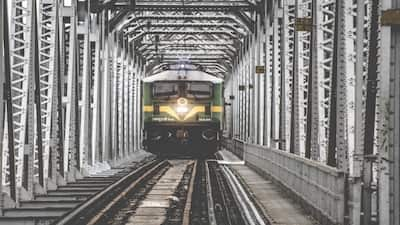
India’s First Hydrogen Powered Train Coach: Indian Railways has successfully tested its first hydrogen-powered train coach, called the Driving Power Car, at the Integral Coach Factory (ICF), Chennai, marking a watershed moment for sustainable transportation. Through X, Railway Minister Ashwini Vaishnaw proclaimed the milestone and said this advancement brings India into the elite countries using hydrogen rail technology.
India’s First Hydrogen Powered Train Coach
Powered by a 1,200 horsepower hydrogen fuel engine, this prototype coach is the most potent of its kind worldwide, exceeding current models in Europe (which typically range between 500–600 HP). It shows India’s aspiration to pioneer hydrogen train technology. The train is a great advance in environmentally friendly rail transit since it produces water vapor as its only by-product and operates zero-emission.
Hydrogen for Heritage
Under the more general “Hydrogen for Heritage” program, Indian Railways intends to use 35 hydrogen-powered trainsets on heritage and hilly routes, this trial is one among others. With ₹70 crore allotted per road for supporting infrastructure like storage and refueling stations, each set is valued at ₹80 crore.
Vande Bharat Water Leak Sparks Concerns: Railways Cite Blocked Filters, Check Viral Video
How Does Hydrogen Powered Train Work?
Hydrogen fuel cells generate electricity and only heat and water by reacting chemically with oxygen. For paths like hill railways that are non-electrified or environmentally sensitive, this enables the system carbon emissions free. The findings of this experiment validate the assertion that hydrogen rail technology is now appropriate in the varied terrain of India.
Originally set for late 2024, commercial deployment on the Kalka-Shimla route has been delayed because of technological adjustments, specifically fitting fuel cells for strong gradients and changing load needs. Following engineer optimization and safety clearances, full-scale launch follows. Powered by an eight- to 10-coach configuration bigger than any hydrogen train models in use today, the trains can carry over 2,600 passengers at speeds up to 110 km/h.
First Hydrogen powered coach (Driving Power Car) successfully tested at ICF, Chennai.
India is developing 1,200 HP Hydrogen train. This will place India among the leaders in Hydrogen powered train technology. pic.twitter.com/2tDClkGBx0
— Ashwini Vaishnaw (@AshwiniVaishnaw) July 25, 2025
Under the Make in India project, it also underlines India’s manufacturing and RandD capacity. The initiative demonstrates India’s determination to get net-zero carbon emissions across its railways by 2030 by distributing ₹2,800 crore to aid in the construction of hydrogen-based transportation infrastructure.
The Chennai testing suggests India’s position amid the international league of hydrogen rail inventors rather than just one prototype. More testing, coordinated infrastructure initiatives, and government backing might enable hydrogen trains to be a reality all across historic, rural, and hilly country.