
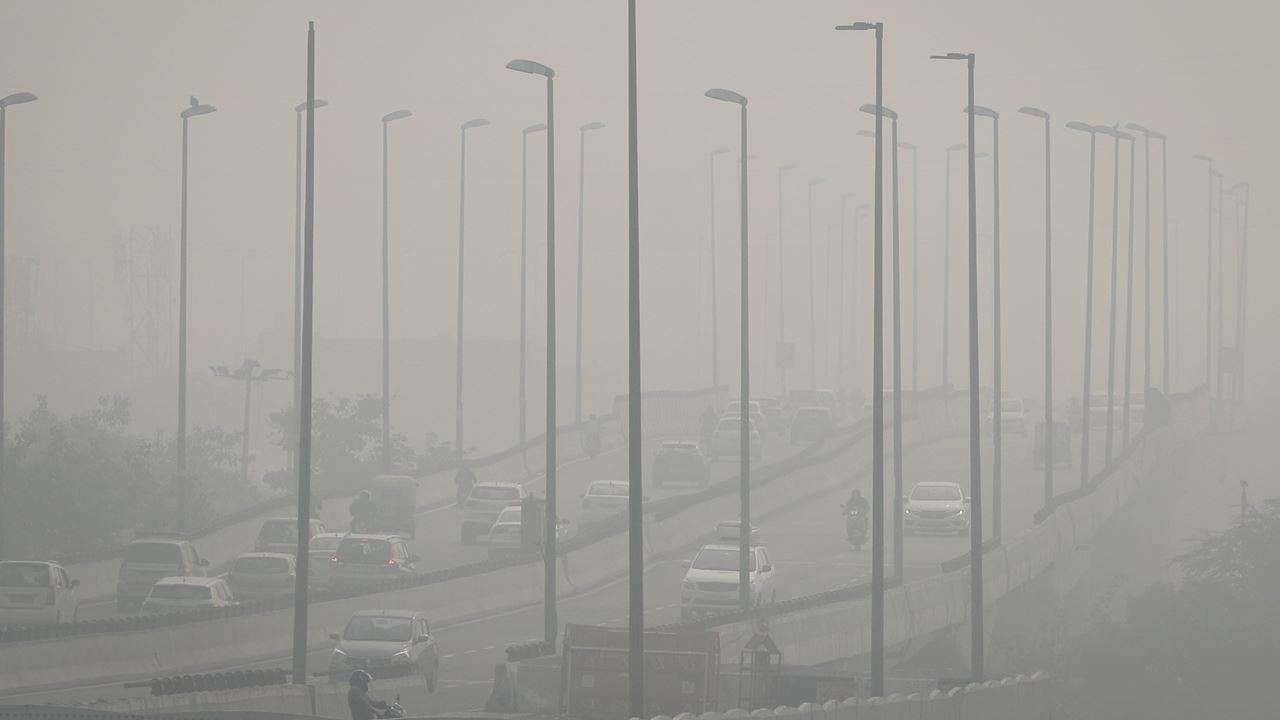
Air Purifier Sales Rise: Air purifier sales are rising across India as more people worry about the health risks of breathing polluted air. The demand is especially high in Delhi-NCR, where pollution becomes a major problem during the winter months. On November 4, Delhi’s AQI reached 373, while 21 monitoring stations recorded air quality in the severe category.
India’s Air Purifier Market Expected to Grow
According to Expert Market Research (EMR), India’s air purifier market was worth around ₹904.52 crore in 2025. It could reach ₹4,094.64 crore by 2035, growing at a CAGR of 16.30% between 2026 and 2035. Rising pollution and greater awareness about health are among the main reasons behind this growth.
Gujarat Cracks Down on Fake Doctors, 35 Cases Registered After Statewide Raids
Delhi-NCR and other northern states account for nearly 70% of the country’s air purifier demand. HEPA technology is also the leading segment, making up around 45% of the market in 2025.
Retailer Croma also reported a 30% rise in air purifier sales during 2025. Delhi-NCR made up 72% of its total sales, followed by Maharashtra at 12% and Karnataka at 4%.
Purifiers priced between ₹5,000 and ₹15,000 made up 49% of Croma’s sales by volume. The super-premium category contributed another 36%. Philips and Dyson together accounted for 84% of its air purifier sales. Croma also recorded its highest weekly sales in one week, which alone contributed 27% of its yearly sales in this category.
Experts Explain the Benefits and Limits of Air Purifiers
Shailender Kumar, an environmentalist and Academic Councillor at IGNOU, Delhi, said air purifiers can help reduce exposure to harmful particles inside homes. But he said they shouldn’t be seen as a replacement for controlling pollution.
“True HEPA filters (H13 or above) capture at least 99.95% of particles at the most penetrating size, around 0.3 micrometres, and PM2.5 is the pollutant of greatest concern in Delhi-NCR during the post-monsoon and winter months,” he said.
Delhi Air Pollution Worsens Ahead of Diwali; Experts Explain Why GRAP-II May Not Be Enough
He advised buyers to choose a purifier according to their room size and its Clean Air Delivery Rate (CADR). It should run regularly and its filters must be replaced on time.
“HEPA filters do not remove gaseous pollutants such as NO₂ or volatile organic compounds, so the benefit depends on choosing a unit with an adequate clean air delivery rate (CADR) for the room,” he said.
Rahul Paul, a geospatial expert, said these machines can lower indoor PM2.5 levels when used and maintained properly. He also warned that they can’t remove every pollutant.
“HEPA-based purifiers can significantly reduce indoor PM2.5 levels, provided they are appropriately sized and maintained. However, they offer only partial protection and cannot eliminate all pollutants. The rising demand reflects growing public awareness but also highlights a serious public health concern: people are being forced to protect themselves indoors because outdoor air is unsafe,” Paul said.
Poorer Families Face a Bigger Risk
Soumya Dutta, former advisory board member of the UN Climate Technology Centre and Network and trustee of MAUSAM, said the rising use of air purifiers also points to a larger problem.
“Delhi NCR and beyond is again choking and killing its residents with highly polluted/toxic air, with Air Quality Index (AQI) hovering around 350-450 at multiple monitoring stations. Air pollution over a long period can lead to serious lung and heart disease, and reduce longevity significantly,” he said.
He said pollution from vehicles, construction dust, garbage burning, stubble burning and firecrackers adds to the problem.
“The poor don’t have the luxury of buying and running HEPA filter/ioniser-based air purifiers. Nor are their houses suitably sealed off from ambient air. Thus, they end up paying the highest price while the rich can protect themselves,” he added.