
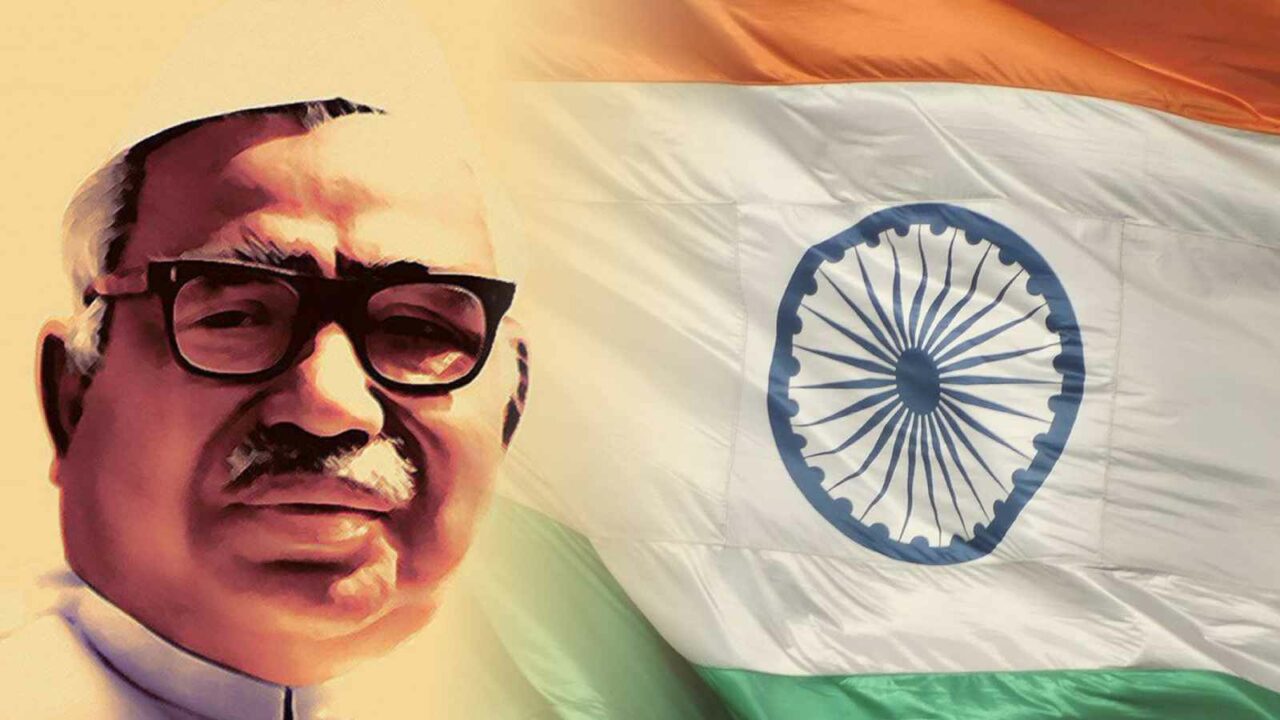
Jagjivan Ram Birth Anniversary: Babu Jagjivan Ram Jayanti is celebrated annually on April 5 because it is the birthday of Jagjivan Ram, a longtime political leader. On April 5, 1908, Jagjivan Ram was born in Bihar to a caste known as “the untouchables.” Jagjivan Ram was not just a politician; he devoted the majority of his life to fighting for the freedom of India and for the voices of the oppressed castes. Because he was a Dalit, his contributions to the country as a social reformer were significantly greater than those of other influential figures.
Celebrating Babu Jagjivan Ram Jayanti History
Jagjivan Ram was the youngest minister in Jawaharlal Nehru’s First Cabinet, where he served as a member of the Constituent Assembly of India. He was one of the very few individuals who emphasised strongly the principles of social justice.
As an advocate for social justice, Jagjivan Ram was instrumental in the 1935 establishment of The Indian Depressed Classes League. The organisation’s mission was to provide equality and welfare to oppressed members of society.
Jagjivan Ram’s Career:
After he was elected to the Legislative Assembly of Bihar in 1937, he is also well-known for the mass organisation of several movements that were completely devoted to rural labour welfare. Later, he joined the Indian National Congress, where he served for more than four decades in a variety of positions.
This Dalit leader’s ferocious repertoire led to celebrations for his contributions to every Indian citizen and for his personality. As a memorial to his legacy, his cremation site has been transformed into the “Samata Sthal.” India celebrates his birthday as “Samata Diwas” or “Equality Day” to honour his fight against various forms of social oppression and caste discrimination, as well as his efforts to promote a social community based on equality and welfare.
Hanuman Jayanti 2023: Date, Time, Muhurat, Puja Vidhi and Significance
The following are facts about Babu Jagjivan Ram:
- Jagjivan Ram was born into a Dalit family in Chandwa, Bihar. His father served in the British army before leaving to acquire farmland in his hometown.
- In the nearby town of Arrah, where he attended school, he encountered discrimination for the first time. He was deemed “untouchable” and was required to drink from a separate container. Jagjivan Ram objected to this by shattering the pot. The principal was then required to remove the pot from the school.
- Jagjivan Ram met the scholar Pandit Madan Mohan Malaviya in 1925 and was profoundly influenced by him. On the invitation of Malaviya, he joined Banaras Hindu University.
- Even in college, Jagjivan Ram encountered discrimination. This motivated him to protest the social boycott of a certain segment of society. In addition, he organised the scheduled castes to protest injustice.
- Following his time at BHU, he enrolled at the University of Calcutta, where he earned a B.Sc. in 1931.
- Subhas Chandra Bose recognised him for his organisational abilities. In 1935, he helped to establish the All-India Depressed Classes League. He joined the Congress Party, where he was recognised as an eloquent advocate for the Depressed Classes.
- In 1935, he proposed during a session of the Hindu Mahasabha that untouchables have access to drinking water wells and temples.
- In addition to participating in the independence movement, he was imprisoned during the Quit India Movement.
- Jagjivan Ram became the youngest minister when Jawaharlal Nehru formed the provisional government. He was appointed the country’s first labour minister after independence.
- He was also in charge of railways, food and agriculture, transportation and communications, irrigation, and defence. The 1971 Indo-Pakistan War was fought during his tenure as defence minister.
- When Morarji Desai became India’s prime minister after the Emergency, he also became India’s deputy prime minister.
- It is a world record that Jagjivan Ram was a member of the Parliament without interruption from 1936 to 1986. He also holds the record for being India’s cabinet minister with the longest tenure. (30 years).
- He fought for the social equality and equal rights of the Depressed Classes.
- His death occurred on July 6, 1986. His memorial at the site of his cremation is titled “Samata Sthal.”