
World Against Child Labour Day 2025: The World Day Against Child Labor is all about shining a light on the serious issue of child labour around the globe and the actions we need to take to put an end to it. Every year on June 12, the International Labour Organization teams up with its partners and constituents worldwide to honor this important day.
This year’s theme highlights both the progress we’ve made and the urgent need to ramp up our efforts to hit global targets.
World Against Child Labour Day 2025
First established in 2002, this day serves as a reminder of the importance of creating a world where children can thrive, learn, and live with dignity instead of being forced to work. It aligns with the goal of eradicating child labor in all its forms by 2025, as outlined in the Sustainable Development Goals (SDG). The focus for the 2025 World Day will be a significant milestone: the release of global estimates and trends regarding child labor.
This joint report from ILO and UNICEF will give us a detailed look at where we currently stand in our commitment to eliminate child labor. While we don’t have all the data just yet, the trends and estimates we do have will help steer policy discussions and encourage renewed commitment and investment.
Child labour decreased by 38% in last decade: ILO
World Against Child Labour Day 2025 Theme
On this World Day, the ILO will advocate for the full ratification of ILO Convention No. 138, which sets the minimum age for employment, and the implementation of ILO Convention No. 182, which addresses the worst forms of child labor. Effectively ratifying and implementing these conventions is crucial for achieving the goals laid out in the Durban Call to Action, which calls for enhanced prevention, protection, and partnerships to eradicate child labor.
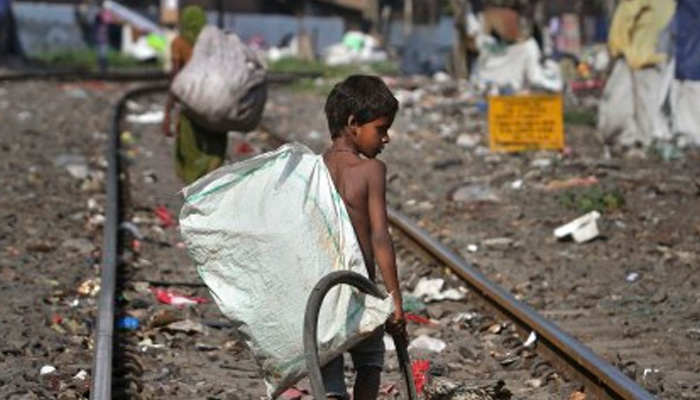
Since the year 2000, we’ve seen some real progress in the fight against child labor, but in recent years, things have taken a turn for the worse. Conflicts, crises, and the COVID-19 pandemic have pushed more families into poverty, leading millions of children back into child labor. Economic growth just hasn’t been enough or inclusive enough to ease the burden that so many families and communities are facing, which often drives them to resort to child labor. Today, a staggering 160 million children are still caught up in this situation—that’s nearly one in ten kids around the globe.
Global Estimates
When it comes to regions, Africa takes the lead, with one-fifth of its children involved in child labor, totaling about 72 million. Asia and the Pacific follow closely behind, with 7% of all children and 62 million in absolute numbers engaged in child labor.
Together, Africa and the Asia-Pacific region account for almost 90% of all children in child labor worldwide. The remaining children in this unfortunate situation are spread across the Americas (11 million), Europe and Central Asia (6 million), and the Arab States (1 million). In terms of percentages, 5% of children in the Americas are involved in child labor, 4% in Europe and Central Asia, and 3% in the Arab States.
While the highest percentage of children in child labor is found in low-income countries, the actual numbers are greater in middle-income countries. In lower-middle-income countries, 9% of all children are in child labor, while in upper-middle-income countries, that figure is 7%. When we look at the absolute numbers, 84 million children in child labor—making up 56% of the total—live in middle-income countries, with an additional 2 million in high-income countries.
Child Labor in India
Child labor is still a significant issue. Globally, around 160 million children aged 5 to 17 are engaged in child labor. Of these, nearly half are in India.
Child labor in India is a pressing issue fueled by a tangled web of economic, social, cultural, and systemic factors. Let’s break down the main reasons:
Poverty: At the heart of child labor in India is the harsh reality of widespread poverty. Families struggling to make ends meet often depend on the income generated by their children just to survive.
Lack of Access to Quality Education: In many parts of India, the educational infrastructure is sorely lacking. Even when schools are available, challenges like subpar teaching, unsafe environments, long travel distances, and a general lack of awareness make it tough for kids to attend or finish their education.
Unemployment and Underemployment of Adults: When adults in a household are either unemployed or earning meager wages, children often have to step in to help support the family, particularly in informal sectors like agriculture, domestic work, and roadside vending.
Migration and Displacement: Families that migrate for seasonal jobs or are forced to move due to conflict or natural disasters frequently bring their children along. Without stable income or access to education, these kids often find themselves working.
Demand for Cheap Labor: Employers tend to favor hiring children because they can pay them less, they’re often more compliant, and they’re less likely to advocate for their rights or join unions.
Weak Law Enforcement: While India has laws like the Child Labour (Prohibition and Regulation) Act and the Right to Education Act, enforcing these laws is often a challenge, especially in rural and informal sectors. Issues like corruption, insufficient inspections, and under-reporting only exacerbate the situation.
How can we improve the numbers?
To truly eradicate child labor in India, we need a comprehensive strategy: enhancing access to free, quality education, bolstering law enforcement, providing support to struggling families through social welfare programs, raising awareness, and ensuring decent job opportunities for adults.
Strengthen Free and Quality Education: We must guarantee access to free, compulsory, and quality education as outlined in the Right to Education Act (RTE). This includes improving infrastructure in rural schools—more teachers, better sanitation, safety measures, and mid-day meals.
Empower Families Economically: Empower families economically by expanding poverty alleviation programs like MGNREGA, PM-KISAN, and ration schemes. This way, families won’t have to rely on their children for income.
Strict Law Enforcement: It’s crucial to properly implement the Child Labour (Prohibition and Regulation) Act and the Juvenile Justice Act. We should ramp up inspections and hold employers accountable for hiring child labourers.
Raising Awareness: We can run widespread campaigns in villages and urban slums to highlight the harmful effects of child labour and emphasize the importance of education.
Ending child labour isn’t just a legal obligation it’s a moral and social responsibility. By tackling the root causes like poverty and lack of education, and ensuring that every child grows up in a safe and nurturing environment, India can pave the way for a stronger and fairer future.