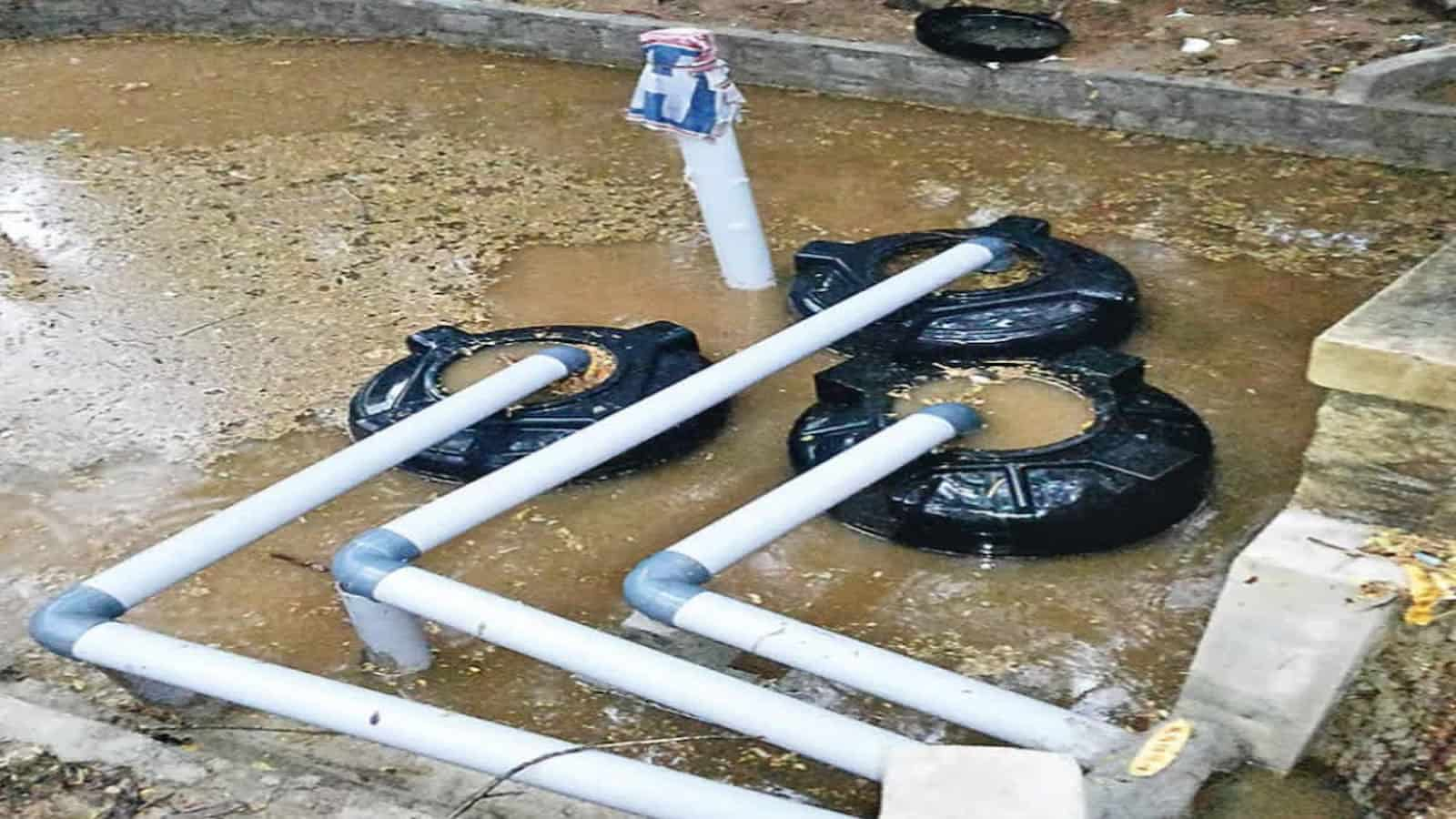
JNTU Hyderabad Reverse Borewells: Jawaharlal Nehru Technological University (JNTU) Hyderabad has found a way to deal with falling groundwater levels by sending rainwater deep into the ground. The university has installed special reverse borewells across its campus to collect rainwater and refill underground water supplies.
The project was started around 12 years ago by professors from the university’s Water Resources Department. The system helps send around 80 million litres of rainwater underground every year. This has helped the university maintain its groundwater levels even when nearby areas face water shortages.
Indian Railways to Run 4 Special Trains Between Pune and Muzaffarpur for Diwali and Chhath Puja
How JNTU Hyderabad’s Reverse Borewell System Works?
The university has made a system to send rainwater underground instead of letting it flow away. It has built 11 pits across the campus to collect rainwater. Each pit is 15 feet long, 5 feet wide and 10 feet deep.
The collected water then goes into special borewells that help it reach around 200 feet below the ground. This allows rainwater to enter the soil faster and refill the underground water supply.
The project was started with an investment of Rs 40 lakh. Borewells were set up at 24 places across the campus to help store rainwater underground.
When it rains, the water moves through these wells due to gravity and enters the ground. This helps the university save rainwater and use it to improve groundwater levels instead of letting it flow away.
Groundwater Levels Remain Stable Despite Falling Water Supplies
Groundwater levels have gone down in many areas around Hyderabad due to El Nino and changing weather. But the JNTU campus has managed to keep its groundwater level stable with the help of its rainwater system.
Professor M.V.V.S. Giridhar from the university’s Water Resources Department explained that the groundwater level changes with the seasons. During winter, the water stays within 10 metres of the ground. “In summer, it reaches only 15 to 20 meters,” he said.
The system sends rainwater deep into the ground, helping refill the underground water supply. This helps the campus manage its water needs even when there isn’t much rain. It also reduces the need to depend on existing groundwater sources.
Bihar Mining Department Tender 2026: ₹15,000 Fee, ₹2 Lakh EMD, Last Date November 12