Blood Moon in India 2026: On March 3, 2026, people across India looked up at the sky to watch a beautiful lunar eclipse. The Moon slowly moved into Earth’s shadow and turned deep red. Many called it a Blood Moon. The most exciting total phase began at 5:11 pm IST. The peak moment came at 5:58 pm IST. The red colour stayed until around 6:23 pm IST.
In Delhi and nearby areas, the best view was between 6:27 pm and 6:47 pm IST. Cities like Mumbai, Kolkata, Chennai and Bengaluru also saw parts of the eclipse. Rural areas with darker skies had even clearer views. The partial phase started at 16:17 IST and the Moon remained slightly shadowed until about 7:39 pm IST.
Total Lunar Eclipse Date and Time: Check the time
- Bengaluru – 6:32 PM
- Hyderabad – 6:26 PM
- Mathura – 6:25 PM
- Chandigarh – 6:27 PM
Blood Moon in India 2026 Pictures
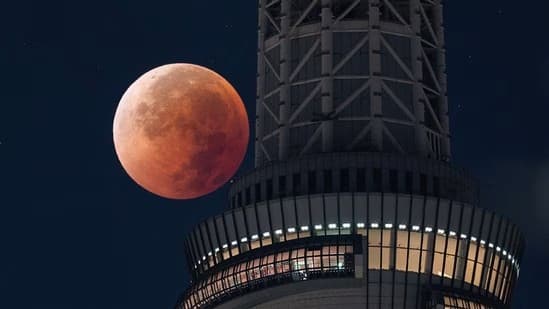

During the eclipse, something rare also happened. Some people saw the red Moon in the west while the Sun was rising in the east. This is called a Selenelion. It is a special optical effect that happens because of the way Earth’s atmosphere bends light.
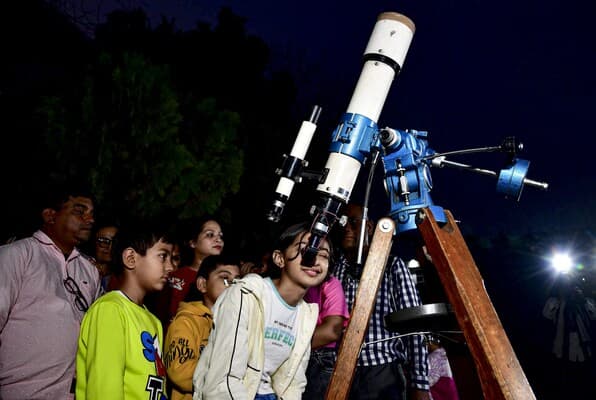
At 19:00 IST, the partial phase ended. The Moon fully came out of the dark shadow. The deep red part disappeared and only a faint shade remained. The dramatic part of the eclipse was over.


Hindu Beliefs and Sutak Kaal in India
#WATCH | Delhi: The partial Lunar eclipse begins; Visuals of the moon from near India Gate pic.twitter.com/zf993YQm3b
— ANI (@ANI) March 3, 2026
In India, lunar eclipses are also important in Hindu tradition. Many people follow religious customs during Chandra Grahan. According to old stories, eclipses are linked to Lord Vishnu and the demon Rahu. It is believed that Rahu swallows the Moon, which causes the eclipse.
Holi 2026 Date and Time: When Will Holika Dahan and Rangwali Holi Be Celebrated?
View this post on Instagram
Sutak Kaal is observed only if the eclipse is visible in that place. On March 3, Sutak began at 09:39 AM IST and ended at 06:46 PM IST. For children, elderly and sick people, Sutak was observed from 03:28 PM to 06:46 PM IST. If the eclipse was not visible in a city, Sutak was not followed there. Penumbral eclipses that cannot be seen clearly are usually not considered for religious rituals.
What’s Next for Skywatchers
After this eclipse, sky lovers in India can look forward to more events. On 20 February 2027, there will be a penumbral lunar eclipse. On 2 August 2027, a partial solar eclipse will take place where only part of the Sun will be covered. More solar and lunar eclipses are expected in 2028 and 2029.
The March 2026 eclipse was special because the Moon passed deep into Earth’s shadow. When this happens, the atmosphere blocks blue light and allows red light to reach the Moon. That is why it looked dark red or orange.