

As per the RBI monetary policy review announced earlier this month, Consumer Price Index (CPI) based retail inflation is projected to remain 7.5 per cent in the first quarter of the current financial year.

The high merchandise trade deficit coupled with the fund outflow from financial markets has weakened India’s external account or balance of payment position.

Forex traders said lacklustre domestic markets, elevated crude oil prices and persistent foreign capital outflows weighed on the local unit.

Rising interest rates, high inflation, the war in Ukraine, and a slowdown in China’s economy have led investors to reconsider what they’re willing to pay for a wide range of stocks, from high-flying tech companies to traditional automakers.

Reacting to the remarks, Chidambaram said the ”goal of a USD 5 trillion GDP appears to be a case of ‘shifting goalposts”’.

The Reserve Bank of India (RBI) lifted its policy repo rate by 90bp to 4.90 per cent in just over a month, signalling its growing concerns that inflation could exceed its 2 to 6 per cent target band for a sustained period.

The six-member Monetary Policy Committee (MPC) today voted unanimously to increase the policy repo rate by 50 basis points to 4.90 percent with immediate effect.

Inflation has been above the RBI’s 2-6 per cent target band since the beginning of this year.As per the latest available data, India’s Consumer Price Index (CPI) based inflation surged to an eight-year high of 7.79 per cent in April.
Governor Das-headed MPC will meet for three day beginning Monday. The decision taken during the meeting will be announced by the governor on Wednesday.

Last month, in its off-cycle monetary policy review the central bank hiked the policy repo rate by 40 basis points or 0.40 per cent.

As per official data, the economy grew by 8.7 percent in FY22, net adding Rs 11.8 lakh crore in the year to Rs 147 lakh crore, the report said, adding this was however only 1.5 percent higher than the pre-pandemic year of FY20.

According to the data of the commerce ministry, in 2021-22, the bilateral trade between the US and India stood at USD 119.42 billion as against USD 80.51 billion in 2020-21.
In its annual report, the RBI said that the cost-push pressures from high industrial raw material prices, transportation costs and global logistics, and supply chain bottlenecks continue to impinge on core inflation.

At the interbank forex market, the domestic unit opened at 77.69 against the US dollar. It moved in a range of 77.51 to 77.69 during the session.
The regional economic output is projected to expand by 5.5 percent in 2022, which is 0.4 percentage points lower than the forecast released in January.
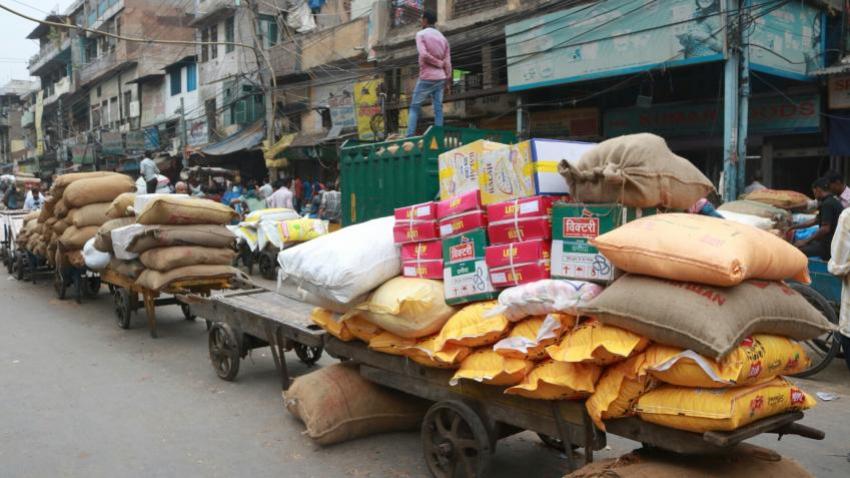
The Wholesale Price Index (WPI) at 15.08 per cent is the highest in the new series, the data for which is available since 2012-13. The WPI inflation has remained in double digit for the 13th consecutive month since April last year.
RBI said that the data may change subject to rectification/update made after the first reporting of banks (in respect of individual frauds).

The dollar index, which gauges the greenback’s strength against a basket of six currencies, was trading 0.10 percent higher at 103.95.

At the interbank foreign exchange, the rupee opened at 76.61 against the American dollar, then lost ground to quote at 76.73, registering a fall of 29 paise from the last close.

This makes foreign investors net sellers to the tune of Rs 17,144 crore in April, much lower than a net withdrawal of Rs 41,123 crore in March, data with depositories showed.
At the interbank foreign exchange market, the rupee opened lower at 76.58 against the American currency, and finally settled for the day at 76.68, down 26 paise over its previous close.

Further, the IMF, in a statement, said that economic damage from the war in Ukraine will contribute to a significant slowdown in global growth in 2022 and add to inflation.
Announcing the monetary policy, RBI Governor Shaktikanta Das said the Indian economy has large forex reserves and that it stands ready and resolute to defend the economy.

The apex bank kept the benchmark interest rate — repo, at which it lends short-term money to banks — unchanged at 4 per cent.
Announcing the monetary policy, RBI Governor Shaktikanta Das said the Indian economy has large forex reserves and that it stands ready and resolute to defend the economy.










