

Besides, a stronger greenback against key rivals and persistent foreign fund outflows put pressure on the domestic currency, forex dealers said.
At the interbank forex market, the local unit opened at 81.60 against the greenback. It witnessed an intra-day high of 81.17 and a low of 81.69 during the session.

The Governor said PAs play an important role in the payments ecosystem and hence were brought under regulations in March 2020 and designated as Payment System Operators (PSOs).

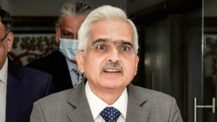
RBI Governor Shaktikanta Das said the impact of inflation globally is weighing heavily on the domestic market.
In the meeting of the Monetary Policy Committee (MPC) that started on Wednesday, five of the members of the MPC voted to hike the key lending rate, repo rate, by 50-basis points (bps).

Unveiling the fifth monetary policy for this fiscal, RBI Governor Shaktikanta Das said the central bank remains committed to price stability to put the country on the sustained path of growth.

Like several other central banks, the main focus of the RBI during the three-day-long meet will again remain on containing high inflation.

In particular, India stands to benefit from greater trade and investment flows, it said, although, at a gradual pace due to regulatory hurdles.

Describing the Chinese slowdown as the worst in decades, he highlighted that this is a self-inflicted pain arising out of its zero tolerance policy towards Covid.

India’s economy grew 13.5 percent year-on-year in the first quarter of 2022-23, reflecting strong growth in services, ADB said in a supplement to its flagship ADO report on Wednesday.

The economic survey released before the annual budget in January this year has estimated FY23 growth to come at 8-8.5 per cent.

Sitharaman said, in her meeting with big businesses two days ago, she appealed to them to ensure that the dues of smaller businesses – who are the backbone of the economy – are cleared in time.
Nageswaran further said that the rupee is being managed in a manner that reflects the fundamentals of the economy.
The RBI is deemed to have failed in its mandate if the average inflation remains outside the 2-6 per cent band for three consecutive quarters.

The forex reserves had dipped by $3.007 billion for the week ended August 26 and by $6.687 billion in the previous week.

India is on course to becoming a USD 30 trillion economy in the next 25-30 years, he said, asking the Indian diaspora to grab the opportunity that the growth story of India offers.

Prime Minister on Saturday inaugurated the Centre-State Science Conclave on Saturday via video conferencing.

Job creation and equitable distribution of wealth remain the other focus areas, she said at India Ideas Summit.
Addressing members of the Institute of Chartered Accountants of India (ICAI) here on Monday, he said India will become a USD 30 trillion economy in next 30 years. India is currently a USD 3.3 trillion economy.

India’s economy expanded 13.5 percent in the April-June quarter, the quickest pace in a year. As per the RBI’s estimates, the country’s GDP is expected to witness a growth of 7.2 percent in the current financial year.

Meanwhile, FPIs have turned net buyers in Indian equity markets for two consecutive months through August and helped domestic indices to stay buoyant.

India would surpass Germany in 2027 and most likely Japan by 2029 at the current rate of growth, State Bank of India (SBI) said in a research report.

The collection in August is, however, lower than Rs 1.49 lakh crore collected in July. The mop up was at a record high of Rs 1.67 lakh crore in April.

The council requested the government to announce new Technology Upgradation Fund Scheme (TUFS) and production-linked incentive scheme for the apparel sector.
Moody’s had in May projected India’s GDP to expand by 8.8 per cent this year. The economy grew by 8.3 per cent in 2021 and contracted by 6.7 per cent in 2020, the year when the pandemic struck the country.










