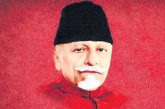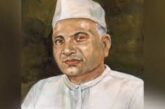


Morarji Desai Death Anniversary: Morarji Ranchhodji Desai, between 1977 until 1979, Indian independence activist Morarji was the country’s fourth prime minister. He held a number of significant government roles over his lengthy political career, including those of Chief Minister of Bombay State, Home Minister, Finance Minister, and Second Deputy Prime Minister of India.
Biography of Morarji Desai
On February 29, 1896, in the current Valsad district of Gujarat, India, Morarji Desai was born into a Gujarati family. He was the eighth child and the oldest. His father was an educator. Desai studied at the University of Mumbai before beginning his career as a subordinate functionary in the provincial government of Bombay in 1918. In 1930, he left his position and joined the civil disobedience movement of Mahatma Gandhi. He spent nearly ten years in British prisons while fighting for freedom. He was appointed the second Chief Minister of Bombay State on April 21, 1952, a position he held until October 31, 1956.
Morarji Desai Career in Politics
In 1931, Morarji joined the All India Congress Committee. From 1931 to 1937, he was the Gujarat Pradesh Congress Committee’s secretary. Under the leadership of then-Bombay Province Chief Minister B.G. Kher, Morarji was appointed Minister for Revenue, Agriculture, Forestry, and Co-operatives in the first Congress government in 1937. The Congress ministers resigned from their positions in 1939 in opposition to India’s enlistment in World War II without the people’s approval.
From 1957 to 1980, Morarji represented the Surat constituency as a member of the Lok Sabha. He was named Minister of Commerce and Industry in 1956 and left that position in 1963. He was nominated to the cabinet of Prime Minister Indira Gandhi in March 1967 as both the Minister of Finance and the Second Deputy Prime Minister of India. In order to lead the Congress Party’s resistance to Indira Gandhi, he resigned in 1969. He was named Minister of Home Affairs on July 1, 1978, a position he held until January 24, 1979.
Kofi Annan Birth Anniversary: All about former United Nations Secretary General
For his political activity, Morarji was incarcerated in solitary confinement from 1975 to 1977. Later, he started participating in the Janata Party, a union of four minor parties. After the Emergency from June 25, 1975, to March 21, 1977, the Janata party won an unexpected election in June 1977 with an astounding and resounding win. The leaders of the Janata party overwhelmingly chose Morarji Desai to serve as prime minister. After two years of political unrest and several divisions within the Janata party, Desai announced his resignation on July 15, 1979, to avert a no-confidence vote.
Moharji Desai’s accomplishments
Morarji received Nishan-e-Pakistan, the highest civilian award given in Pakistan, in recognition of his outstanding efforts to help bring about peace between the two antagonistic nations. The only Indian to receive this accolade is him. According to Morarji, socialism can only be achieved when the poor and underprivileged in the rural, urban, and suburban sectors have a respectable level of living. He always supported the tenants and peasants by passing progressive laws to enhance their quality of life and led the state of Bombay for a much longer period of time than many other chief ministers in the nation. He served with unwavering sincerity, which helped him build a solid reputation.
While serving as India’s Prime Minister, he carried out initiatives to empower all Indians, regardless of their circumstances. He reaffirmed that no one is exempt from the rule of law in any way. As a matter of faith, he placed more importance on truth than on usefulness. He refused to let his values be put on the back burner in the face of emergency situations. Even under challenging conditions, he remained true to his beliefs.
Morarji Desai’s Cause of Death
He gave up his position as Prime Minister in 1979 and resided in Mumbai until his passing on April 10, 1995, at the age of 99. Desai had held that position since the passing of former French Prime Minister Antoine Pinay in December 1994, making him the oldest living former head of state. During his final years, Desai was recognised as a generational independence fighter.
Personal life of Morarji Desai
At the age of 15, Morarji Desai wed Gujraben in 1911. Among their five kids is Kanti Desai. Jagdeep and Bharat Desai are their grandson’s names. Madhukeshwar Desai is an Indian lawyer and politician who is a member of the Bharatiya Janata Party. He is one of his great-grandsons. Since 2013, Madhukeshwar has held the position of National Vice President of the BJP Yuva Morcha, the organisation for young people within the BJP. Vishaal Desai, son of Bharat Desai, is the other great-grandson of Morarji and a writer and director. Morarji Desai was a moralist and a devout adherent to the ideals of Mahatma Gandhi. He was a vegetarian by commitment as much as by birth.