


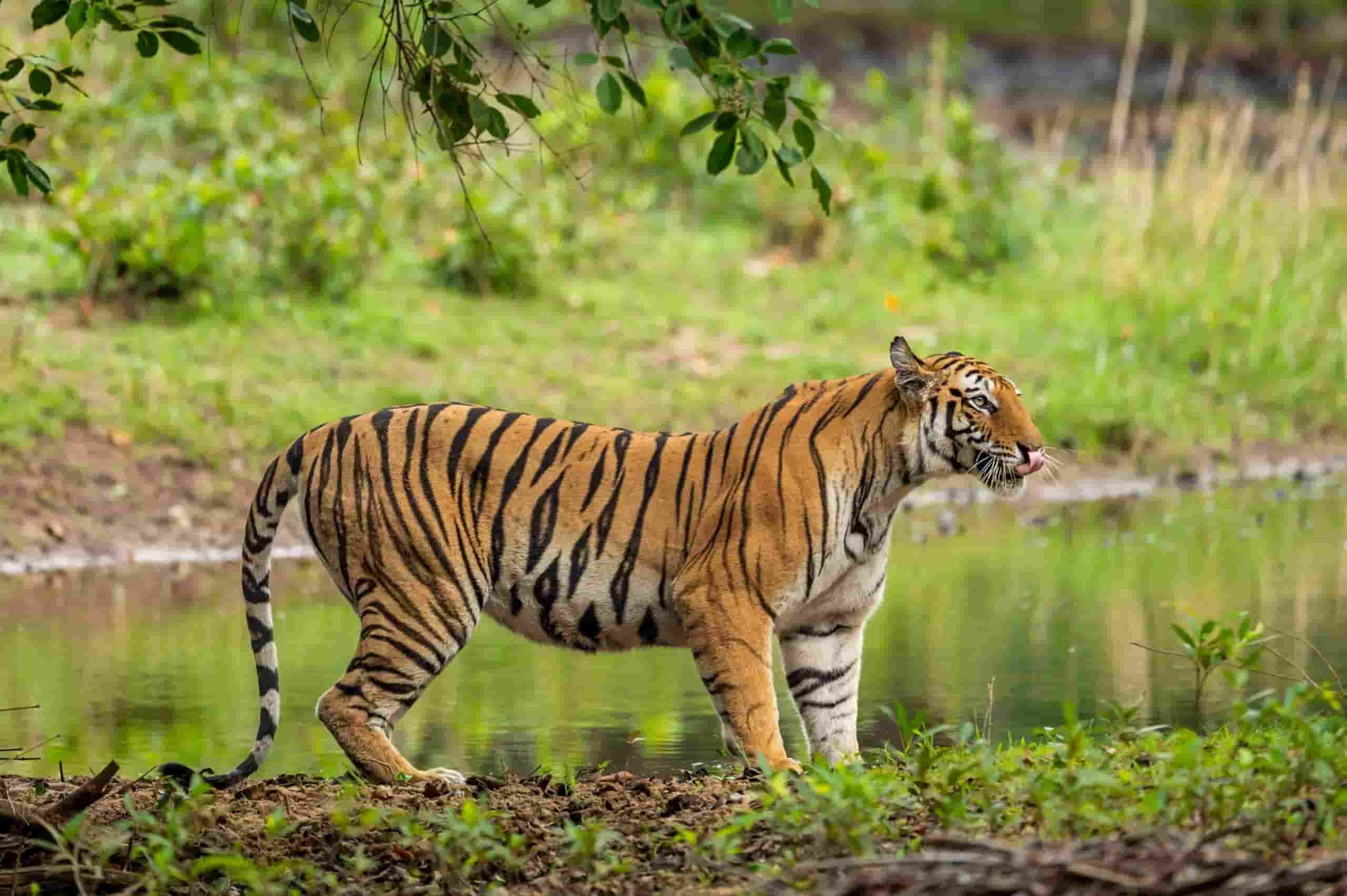
Nameri Tiger Reserve Rise: The tiger population in Assam’s Nameri Tiger Reserve has gone up sharply in the last three years. The number of individually identified tigers has increased from just three in 2022 to 12 in the latest monitoring cycle.
The reserve is located in Sonitpur district and the latest numbers point to a steady improvement in the tiger population. The records have also been checked through scientific monitoring carried out by the Wildlife Institute of India (WII), Dehradun.
According to data shared by Assam Forest, Environment and Mines Minister Jayanta Mallabaruah, Nameri had three identified tigers during the All India Tiger Estimation (AITE) in 2022. The number went up to nine during the Phase-IV assessment in 2023-24. It later reached 12 in the following monitoring cycle.
Bollywood Movies Releasing In October 2026: Check Full List Of Hindi Films
Piraisoodan B, divisional forest officer (DFO) of the Western Assam Wildlife Division, said the increase in tiger numbers is an encouraging sign for conservation work in Nameri.
He also stressed that the forest needs continuous protection. Regular monitoring and protection of wildlife habitats will be important to keep the tiger population growing and allow the animals to move safely across the larger forest landscape.
Two Tigers Spotted in Sonai Rupai

Another important development has been reported from Sonai Rupai Wildlife Sanctuary, which is part of the wider Nameri landscape. Two tigers have recently been recorded in the sanctuary after being absent from the area for many years.
Tigers were considered locally absent from Sonai Rupai since the early 2000s. Their return is therefore an important development for wildlife conservation in the region.
The new records also show why connected forests are important. Tigers don’t stay inside one protected area all the time. They can move between Nameri, Sonai Rupai and other nearby forests in search of food and suitable habitat.
Why The Tiger Monitoring is Important?
The Phase-IV monitoring programme provides detailed information about where tigers are present and how they are using the forest. This information helps forest officials understand changes in the tiger population and plan future conservation work.
It can also help authorities find areas that are regularly used by tigers. Such information can be useful for improving forest protection and managing important wildlife habitats.
The Nameri-Sonai Rupai landscape is located near the Assam-Arunachal Pradesh foothills. This makes it an important area for animals that move across the larger forest region. Nameri covers around 464 sq km and has evergreen and semi-evergreen forests. It also has rivers, wetlands and other habitats that support many species of wildlife. The reserve is in northern Sonitpur and shares its northern boundary with Pakke Tiger Reserve and Doimara Reserve Forest in Arunachal Pradesh.
The Agarkar Era: Trophies, Transition, and Turning Points in Indian Cricket
The Jia-Bharali river system is an important part of the landscape. Nameri gets its name from the river system that flows through the region. Its forests and rivers together create an important wildlife habitat in the northern Brahmaputra Valley.
Nameri Became A Tiger Reserve in 2000
Nameri was declared a National Park in 1998. It was later notified as a Tiger Reserve in 2000. The tiger reserve landscape has a 320-sq-km core area. This includes Nameri National Park and Sonai-Rupai Wildlife Sanctuary. It also has a 144-sq-km buffer area.
Nameri falls under the Brahmaputra Valley Biogeographic Province (9A) of the Northeast Biogeographic Zone. It is also an important part of the Nameri-Sonai Rupai landscape on the northern side of the Brahmaputra.
The increase from three identified tigers in 2022 to 12 in 2024-25 is a major change for tiger conservation in northern Assam. The discovery of two tigers in Sonai Rupai adds further importance to the development.