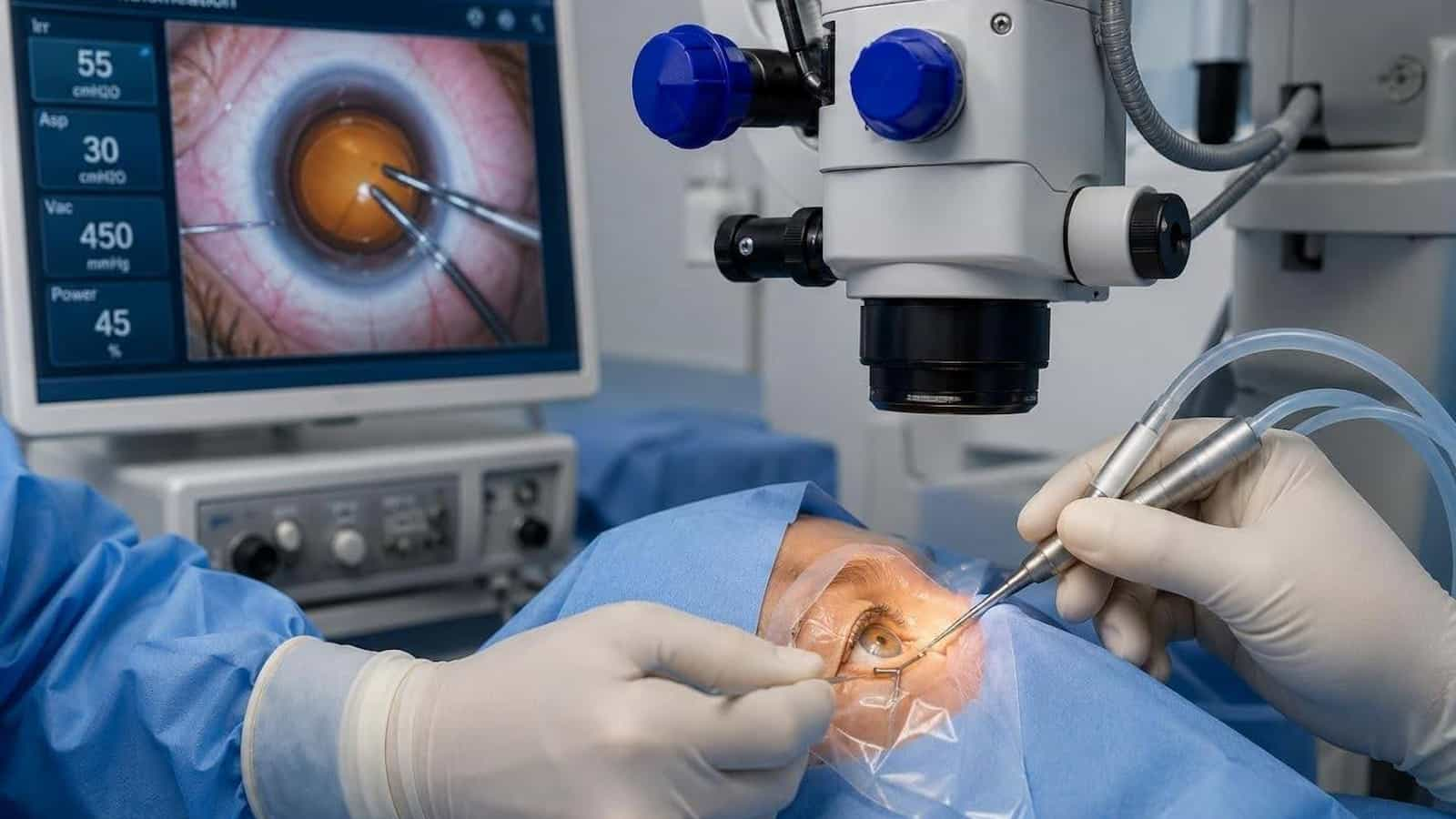
Cataracts develop slowly, which is why many people adjust to blurry vision without realising how much they are missing. The clouding of the eye’s natural lens is common with age, yet it does not always call for an operation straight away. Knowing when cataract surgery becomes necessary helps you act before your safety or independence is affected. This blog explains the situations in which treatment is needed and the signs that suggest phacoemulsification is a suitable option for your eye.
Situations That Call for an Operation
Cataracts progress at different speeds, so there is no single right moment for everyone. Your eye doctor will usually advise cataract surgery once vision problems start to interfere with daily life. Common situations include:
- Reading, cooking or using your phone has become difficult despite stronger glasses.
- Night driving feels unsafe because of glare and halos around headlights.
- You have had falls or near misses because of poor depth perception.
- Your work or hobbies suffer because your vision is no longer clear enough.
Other medical situations are more pressing. If a dense cataract blocks the view needed to monitor or treat another eye problem, such as diabetic retinopathy, cataract surgery may be needed so that care can continue. A swollen, hardened lens can also raise pressure inside the eye, and in that case, cataract surgery helps protect the eye itself.
Waiting too long can make the lens harder, which means cataract surgery may become more complex later. If you are unsure, an eye check-up can tell you whether cataract surgery is needed now or can wait.
Signs Phacoemulsification May Suit You
Phacoemulsification uses ultrasound to break up the clouded lens before it is gently removed, and it is the most widely used technique today. Your surgeon may recommend phaco surgery if your eye shows certain features. These include:
- The cataract is early to moderately advanced, so the lens is soft to medium in firmness.
- Your cornea is clear and healthy.
- Your pupil widens well with dilating drops.
- There is no heavy scarring or weakness inside the eye.
- You would like a quicker recovery with a small incision.
A small incision is the main advantage, as phaco surgery usually needs no stitches and most people go home the same day. Healing is generally quick, and many people notice clearer vision within days.
Very dense cataracts may need a different technique, so a detailed eye examination decides whether phaco surgery is right for you. Before cataract surgery, your surgeon will also measure your eye to choose the correct lens.
Conclusion
Deciding on cataract surgery depends on how much your vision limits your day, not just a number on an eye chart. If glare, blur or another eye condition is holding you back, speak to a specialist without delay. A simple examination will show how far the cataract has progressed and which technique suits your eye. For suitable cases, phaco surgery offers a small incision, quick healing and clearer sight. With timely advice, cataract surgery becomes far less daunting. So, book an eye check-up today and ask your surgeon whether phaco surgery is right for you.