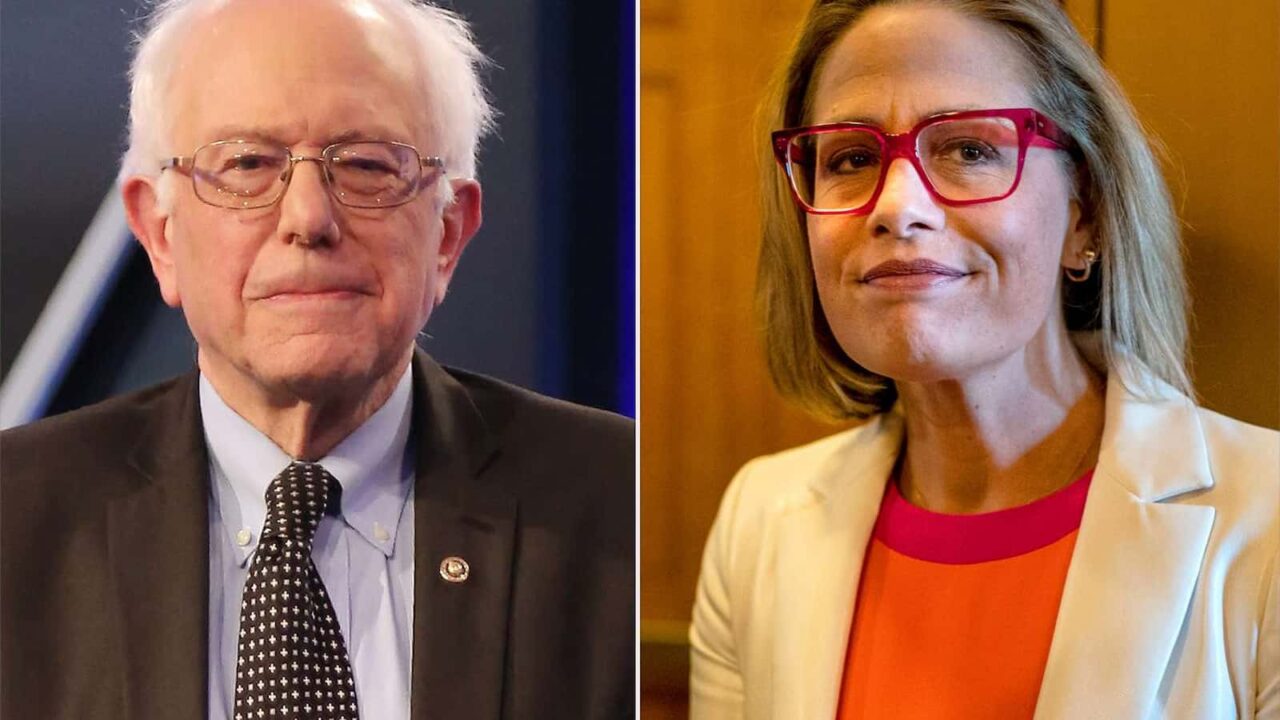
2024 Senate retirement watch: Sens. Kyrsten Sinema (I-AZ) and Bernie Sanders (I-VT) are the last incumbents remaining for re-election in this cycle who have not yet declared their candidacy for 2024.
The Democratic Party holds a 51-49 majority in the Senate. The Republican Party has ten incumbents seeking re-election in this cycle, whereas the Democratic Party has twenty-three, including Sanders and Sinema, both of whom are Democratic caucus independents.
Former SC judges divided over increasing retirement age
Sanders has maintained a reticent stance regarding his 2024 plans, disclosing to Capitol-based reporters that such inquiries are unrelated to the substantive progress he is making. The independent senator is elected to represent the deep-blue state of Vermont, where he will have sufficient time to decide on the filing deadline of next August.
Sanders is currently preoccupied with presiding over the Senate Health, Education, Labor, and Pensions Committee, a position that grants him oversight of endeavors aimed at enhancing the rights of workers and broadening access to healthcare. Both issues were central to the campaigns of Bernie Sanders for the presidency.
Sanders and Senate Majority Leader Chuck Schumer (D-NY), in his capacity as HELP chairman, have been collaborating on a drug pricing reform measure that is anticipated to be advanced early next year. It is believed that the agreement contains several provisions, including reforms to the way pharmacy benefit managers function.
When Sanders decides to run for a fourth term, his age will presumably come into the discussion as well. Sanders, who is currently 82 years old, would turn 89 after a sixth term that begins after he reaches 83.
Sanders is not the sole octogenarian serving in the Senate, and his age of 90 places him in no way near that of the chamber’s oldest member, Sen. Chuck Grassley (R-IA). However, he has encountered numerous health complications, most notably a heart attack in 2019 that temporarily halted him from campaigning.
In the interim, Sinema is nearing the end of 2023 while attempting to reach an agreement in bipartisan border security negotiations; a favorable outcome could significantly enhance her chances of being re-elected in a race she has not yet declared.
Senators James Lankford (R-OK) and Chris Murphy (D-CT) are leading the negotiations, which have primarily centered on changes to federal asylum policy and the Biden administration’s use of the humanitarian parole authority. Sinema has been actively engaged in these discussions. As part of the negotiations, there have also been reports that the White House has proposed increasing mandatory detention rates and establishing a new border expulsion law; however, neither the Senate working group nor the Biden administration has publicly confirmed this.
All parties involved in the negotiations have agreed that this is among the most challenging legislative tasks they have ever encountered. Sinema, who has declined to discuss the subject, may have her political future at stake in the achievement of a consensus.
About the complexity of border legislation, Sinema stated in an interview, “This is without a doubt the most difficult task we’ve ever undertaken.” “My state can no longer afford for Congress to disregard this or revert to their partisan comfort zones of mere self-deprecation.”
Although Sinema continues to raise funds, her 2024 reelection campaign has not yet been launched. The former Democrat, who has since become an independent, remains silent regarding her intentions as a potential three-way race takes shape.
Sinema is the most vulnerable incumbent seeking re-election in the 2024 election cycle due to her low approval rating in Arizona and public estrangement from the Democratic Party, despite her immense influence as one of the most coveted crossover votes in a closely divided Senate.
In opposition to the 60-vote filibuster threshold, she and Sen. Joe Manchin (D-West Virginia) emerged as adversaries within the party. This decision came as the remaining members of the Senate Democratic Caucus joined their cause, and they were subjected to a highly publicized and intense pressure campaign to change their position as President Joe Biden’s agenda encountered obstacles. Sinema, specifically, became a bogeyman in the eyes of Democrats due to her inability to publicly defend her position with the same frequency as Manchin, who upholds an extensive press schedule.
Sinema’s candidacy for a second term would test her hypothesis that the majority of electors have abandoned their party allegiance. It is uncertain whether she can assemble a sufficient centrist coalition to secure a statewide victory.
In January, Representative Ruben Gallego (D-Arizona), who became a notable critic of Sinema for challenging the party’s stance during Biden’s administration, initiated an effort to unseat her. In the absence of Sinema in the Democratic primary, Gallego is anticipated to securely secure the nomination.
In October, Republican Kari Lake, the party’s candidate for governor of Arizona in 2022 and an individual who refuses to concede defeat to incumbent Katie Hobbs (D-Arizona), began her campaign for the GOP nomination. Despite her controversial reputation, she has conferred with the leadership of the National Republican Senatorial Committee as Republicans attempt to unite behind a single candidate in the hopes of securing a victory in a potentially complicated three-way race.
Senate passes law to ban Chinese firms listing on US exchanges