
SEBI F&O Report 2026 Tomorrow: The Securities and Exchange Board of India (SEBI) is expected to release its latest study on futures and options (F&O) trading for financial year 2025-26 on Thursday, August 20, according to reports. The study is expected to provide a more detailed picture of participation and trading behaviour across different categories of investors in India’s derivatives market.
At the same time, SEBI Chairman Tuhin Kanta Pandey has issued a strong warning against attempts to manipulate the newly introduced Closing Auction Session (CAS) and use such manipulation to discredit the system.
SEBI F&O Report 2026 Tomorrow: What to Expect?
The upcoming study is expected to examine F&O trading activity during FY2025-26, including the participation and behaviour of different categories of market participants.
SEBI has previously published studies highlighting the risks faced by individual investors in equity derivatives. The regulator’s latest annual report also records significant changes in derivatives activity during FY26 following regulatory interventions.
A recent Rajya Sabha response dated August 11 confirmed that SEBI has analysed individual and retail participation and profitability outcomes in the F&O segment over the last five financial years.
Tuhin Kanta Pandey Warns Against CAS Manipulation
Alongside the F&O study announcement, SEBI chief Tuhin Kanta Pandey has sent a strong message to market participants over the newly introduced Closing Auction Session.
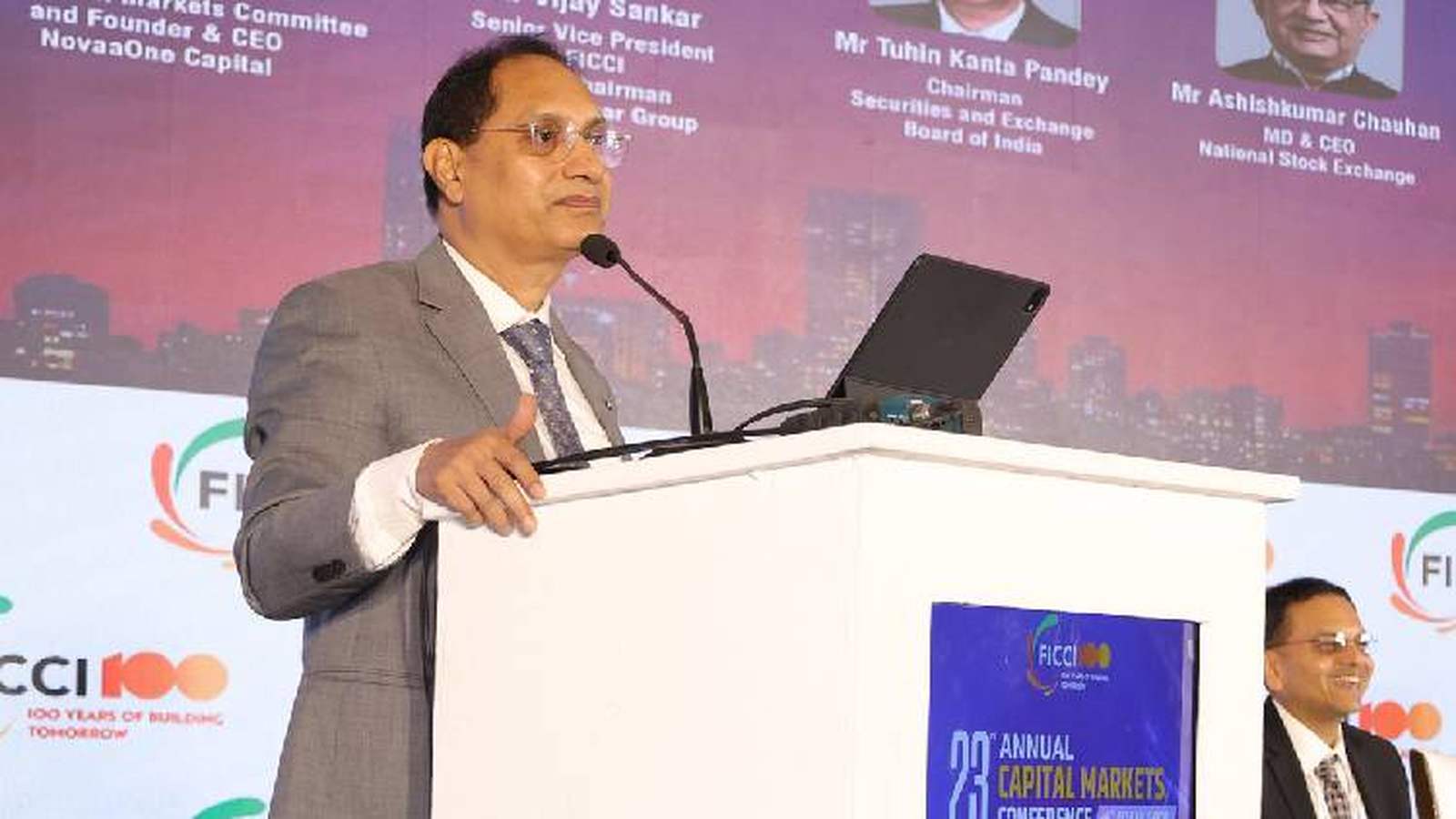
Speaking at the 23rd FICCI Capital Markets Conference (CAPAM 2026), Pandey said SEBI would take action against anyone attempting to manipulate CAS in order to discredit the mechanism. “We can catch hold of manipulation in CAS relatively easily. CAS is for transparency. And if anybody feels that they will manipulate CAS for defaming the new system, they are in danger,” Pandey told reporters on the sidelines of 23rd FICCI Capital Markets Conference (CAPAM 2026). “I think CAS participation is improving and will further improve. We are looking at the constraints for participation,” Pandey said.
Pandey argued that manipulation under CAS can be identified relatively easily compared with the previous Volume Weighted Average Price (VWAP) mechanism.
The SEBI chief said CAS was introduced to improve transparency and warned that attempts to manipulate the system could invite regulatory action. “We will shortly be issuing guidelines for responsible use of AI/ML in our markets,” Pandey said. The framework will require “kill-switch and humans-in-the-loop controls along with data controls”, he added.
SEBI Proposes Higher ISIN Cap, Eases Rules for Debt Securities
What Is the Closing Auction Session?
The Closing Auction Session (CAS) is a new mechanism designed to determine the closing price through an auction-based process.
Under the system, buy and sell orders are accumulated during a designated period instead of being immediately matched. The orders are later matched via an auction mechanism to settle the closing price.
SEBI put out this new framework on August 3, 2026, as a more broad step aimed at boosting transparency in the Indian equity market.
However, Pandey has made it clear that CAS is here to stay. “We are examining an IT resilience index for market infrastructure institutions to provide an objective framework for assessing the resilience of critical systems,” he said.
SEBI Says No CAS Manipulation Detected So Far
Earlier this month, Pandey said SEBI hadn’t really spotted any kind of manipulation in the freshly introduced closing auction sessions.
He pointed to the divergence among the major market indices, especially in those first few days, saying it came from cautious participation like traders and institutions adjusting slowly to the whole new mechanism. “CAS is for transparency. But if someone thinks that we will manipulate the CAS to defame it, then they are mistaken,” he said.
“In the CAS system, we have more capability to catch manipulation. Compared to the old VWAP system, in the CAS system, we can catch manipulation relatively easily,” Pandey said. On August 17, he said the mechanism will remain as part of India’s market structure while the regulator continues to review the worries raised by traders and other market participants.