
Their spacecraft, SpaceX’s Dragon, launched successfully from the Kennedy Space Center in Florida on Wednesday after multiple delays.

AI startup OpenAI made waves recently when it announced that its revolutionary chatbot, ChatGPT, hit 300 million weekly active users, doubling the number counted last September 2023.

Elon Musk has shared a plan to send Starship to Mars as early as 2026. A robot may go first, with humans following by 2029. SpaceX hopes to build a new future for people on the Red Planet.

Earth faces many big dangers that could end life as we know it. From the Sun growing too hot to meteors crashing, volcanoes erupting, global warming, or even nuclear war.
Shukla’s travel to space, onboard SpaceX’s Dragon spacecraft, comes four decades after Rakesh Sharma’s iconic spaceflight onboard Russia’s Soyuz spacecraft in 1984.
The EOS-09 satellite will be launched onboard the ISRO’s reliable Polar Satellite Launch Vehicle (PSLV) at precisely 5:59 am on May 18, as confirmed by officials.
The peak viewing time of the rate of fireballs and other meteors to be witnessed is April 21. This meteor shower has a relatively short peak (not weeks-long periods of meteor viewing as with some showers).

Gaganyaan will be ISRO’s first attempt towards acquiring human spaceflight capabilities. Before sending the crew, the ISRO is planning to send uncrewed mission to the space under its Gaganyaan project.

Singh, also the Minister of State in the Prime Minister’s Office, took to X to greet scientists at the Indian Space Research Organisation (ISRO).
The mission, launched on December 30, aims to demonstrate in-space docking using small spacecraft.
The Bengaluru-headquartered space agency had originally planned to launch European Space Agency’s (ESA) Proba-3 at 4.08 pm on Wednesday from the spaceport.
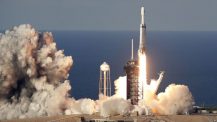
Scientists prepare for an artificial eclipse using ESA’s Proba-3 project, carried by ISRO’s PSLV-XL rocket with extra boosters, ahead of the upcoming total solar eclipse.

This new class of tiny RNA molecules has been recognized as playing a pivotal role in gene regulation, fundamentally altering our understanding of cellular growth and specialization in multicellular organisms, including humans.
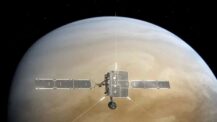
This mission marks a significant stride in the government’s ambition to explore and understand Venus, expanding India’s space endeavors beyond the Moon and Mars.

This groundbreaking mission took place at an altitude of approximately 700 km, further from Earth than any human has been since the Apollo Moon missions.

NASA has explained an unexplained noise from the Starliner spacecraft, stating that the complex audio system between the space station and Starliner is responsible for the noise.

This historic achievement, which includes the safe landing of the Vikram Lander and deployment of the Pragyaan rover near the Moon’s South Pole, positions India as the fourth country to land on the Moon and the first to do so in this region.

This advance promises to revolutionize fields such as defense and optical communications by leveraging easily available visible-light cameras instead of traditional bulky infrared sensors.

Currently, the moon’s core has shrunk by about 50 metres, or 164 feet, over the past several hundred million years.