
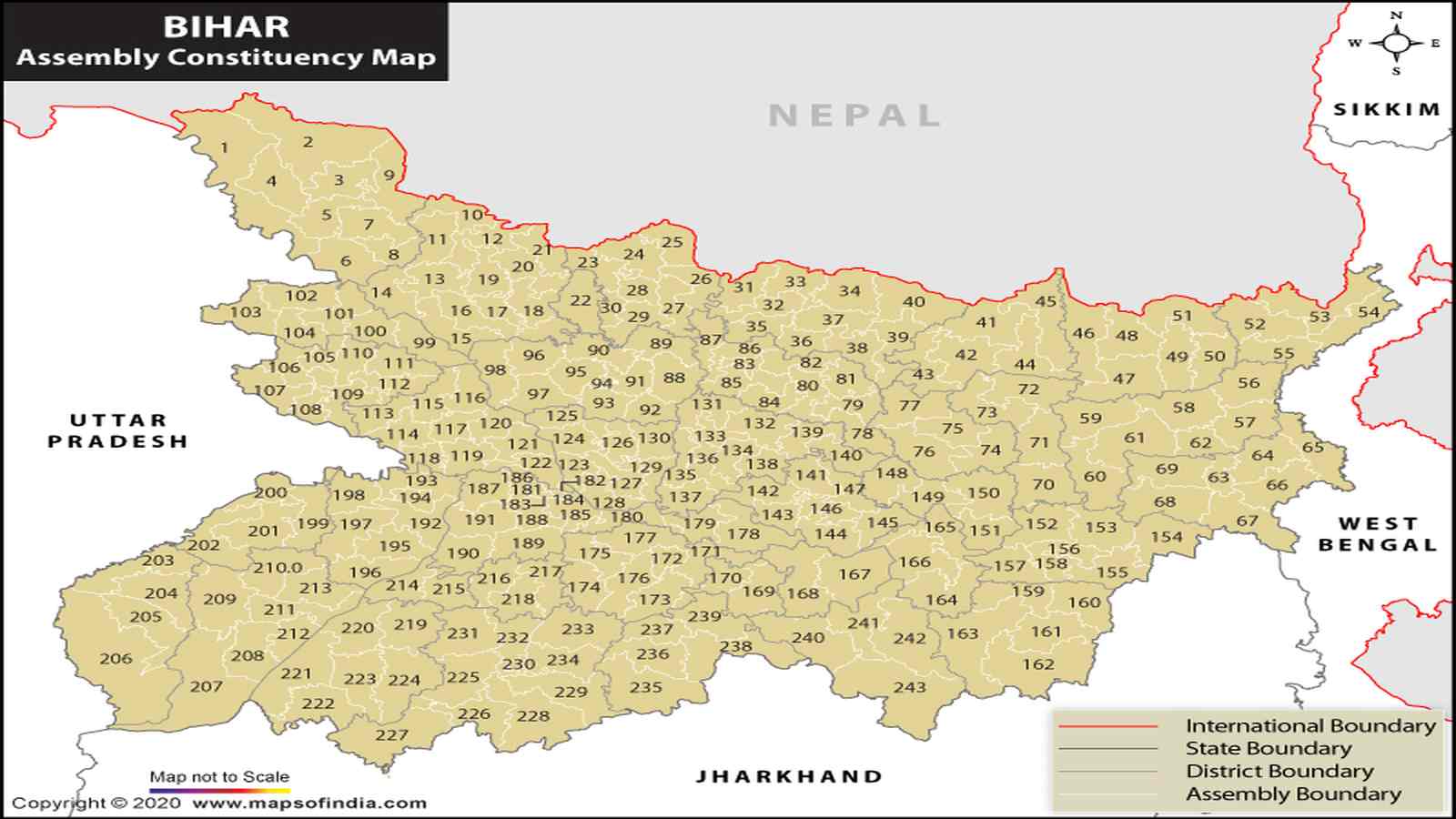
Garkha (SC) Assembly Constituency 2025: Garkha (SC) is a reserved assembly constituency located in Saran district, Bihar. Located about 55 km from Patna, the area includes the Garkha community development block and a number of gram panchayats such as Badlu Tola, Lohari, Purwi Telpa, Sherpur, and others. The constituency is reserved for the Scheduled Castes (SC), and the SC community comprises around 42,039 voters in the area.
Voters and Local Issues
The local issues are usually centered around infrastructure development, access to education and healthcare, and employment opportunities. Moreover, the region is riddled with problems like low agricultural productivity and water scarcity, which have a considerable impact on the voter’s worries and priorities.
Garkha (SC) Assembly Constituency 2025: Recent Political History
Garkha (SC) has changed the curve of its political history in the last few elections. During the 2010 Bihar Assembly elections, Gyanchand Manjhi Bharatiya Janata Party (BJP) won the seat with 41,033 votes, just beating Muneshwar Chaudhary from the Rashtriya Janata Dal (RJD) who got 39,246 votes.
2015 elections brought about a major change, and Muneshwar Chaudhary of the RJD got elected with a big lead. He got 89,249 votes (56.6%) and thus defeated Gyanchand Manjhi of the BJP who got 49,366 votes (31.3%).
In the 2020 elections, Surendra Ram of the RJD took the lead and won with a vote count of 83,412 (47.21%), thus overpowering Gyanchand Manjhi of the BJP who got 73,475 (41.59%).
Bikram Assembly Constituency 2025: Full Candidate List, Poll Date, Past Results and Winning Margins
Election Numbers (2010–2020)
2010: Gyanchand Manjhi (BJP) – 41,033 votes
2015: Muneshwar Chaudhary (RJD) – 89,249 votes (56.6%)
2020: Surendra Ram (RJD) – 83,412 votes (47.21%)
Garkha (SC) Assembly Constituency 2025: Past Complete Winners List
1957: Ram Jaipal Singh Yadav
1962: Shivshankar Prasad Singh
1967: Vishwanath Bhagat
1969: Jaglal Chaudhary
1972: Raghunandan Majhi
1977: Muneshwar Choudhary
1980: Raghunandan Majhi
1985: Muneshwar Choudhary
1990: Muneshwar Choudhary
1995: Raghunandan Majhi
2000: Gyanchand Manjhi
2005: Raghunandan Majhi
2010: Gyanchand Manjhi (BJP)
2015: Muneshwar Chaudhary (RJD)
2020: Surendra Ram (RJD)
Garkha Assembly Elections 2025 Voting Date
The Garkha seat in the Bihar Assembly Election was voted on November 6, 2025.
Garkha Assembly Elections 2025 Result Date
The Election Commission of India (ECI) has set 14.11.2025 as the date of results for the Garkha constituency, along with the polling result of all Bihar Assembly seats.
Garkha Assembly Elections 2025 Candidates List
| Party | Candidate Name |
|---|---|
| AAP | Sadan Kumar |
| BSP | Avinash Kumar |
| Jan Suraaj Party | Manohar Kumar Ram |
| Lok Janshakti Party (Ram Vilas) | Simant Mrinal |
| RJD | Surendra Ram |
| Rashtriya Lok Janshakti Party | Vigan Manjhi |
| Republican Party of India (A) | Nagendra Ram |
| INDEPENDENT | Muneshwar Chaudhary, Nand Kishor Manjhi, Neeraj Ram, Raghunandan Manjhi, Rajkumar, Sabita Devi |
What to Watch During the 2025 Contest?
1. Candidate Profiles: The political scene in Garkha (SC) is really going to be influenced by the decisions of the major parties as to which candidates to put forward and on the popularity of these people.
2. Voter Turnout: Voter turnout will be an indicator of how engaged the electorate is and will also provide a clue as to the efficacy of the campaign strategies.
3. Campaign Strategies: Party propaganda, for example, door-to-door visits and issue-centric campaigns, would be the main reasons for attracting the undecided voters to their side.
4. Alliance Dynamics: The impact of pre-election alliances or seat-sharing deals could extend beyond just the number of votes into the party strategies as well.
5. Local Issues: The importance of local issues, for instance, infrastructure development and social welfare programs, will be the primary factors in altering voter decisions.