
Nahay Khay 2026: Chhath Puja is not just a festival to worship the Sun God but also a reflection of how much our country values the relationship between nature, seasonal eating and traditional eating.
The 4-day festival begins with Nahay Khay. Devotees will purify themselves with a bath, clean their homes and prepare the traditional Sattvic meal also known as Kaddu Bhaat.
Kaddu Bhaat is made using kaddu/lauki, rice, chana dal, sendha namak and desi ghee. It is a simple dish. Interestingly the ingredients link back to Ayurveda and its principles of Ahara, Agni, Ritucharya and balancing our doshas.
Chhath Puja 2026: When is Nahay Khay?
Nahay Khay will be celebrated on Friday 13th November 2026. The festival will be held on the following dates:
- 13th November: Nahay Khay
- 14th November: Kharna
- 15th November: Sandhya Arghya
- 16th November: Usha Arghya and Parana
This day is the start of the vrat. People will purify themselves with a bath and clean their homes. They will prepare the first meal of the festival.
What is Kaddu Bhaat And Why Do We Eat It On Nahay Khay?
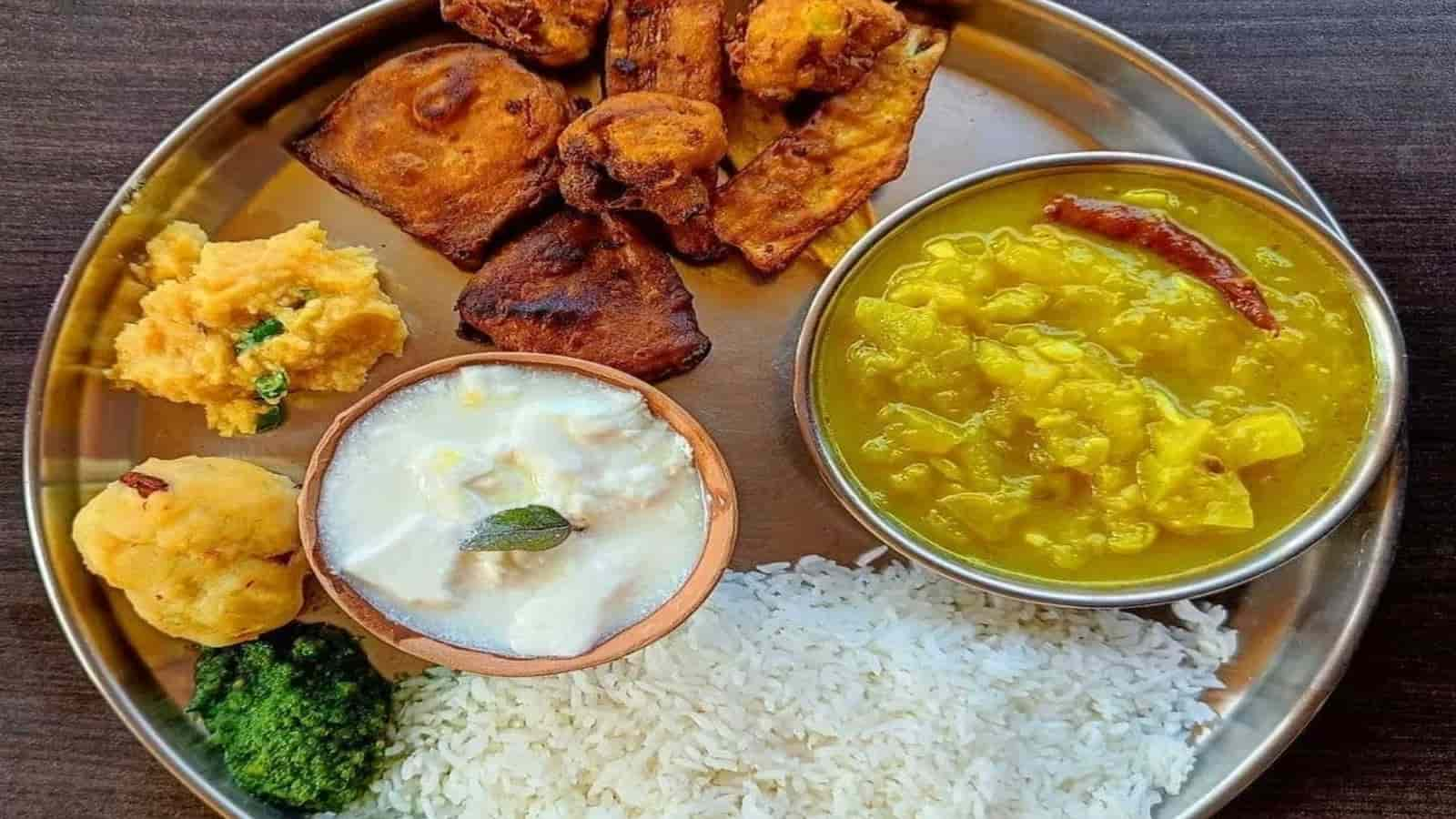
Kaddu Bhaat is a traditional meal eaten during Chhath. It consists of a vegetable dish, rice and chana dal. Interestingly depending on the region you live in you may not actually be eating Kaddu! Many meals in Bihar during Chhath will be a lauki curry with rice and chana dal as they are referring to the curry as kaddu-bhaat. Traditionally Kaddu Bhaat consists of:
- Lauki/kaddu sabzi cooked in ghee with simple spices
- Arwa chawal
- Chana dal giving us a source of plant based protein
- Sendha namak
- Often this meal will be prepared without using onions and garlic
This meal is very fresh, clean and simple. Often people will use separate utensils and traditional clay stoves. Apart from being important for the festival itself this combination has some interesting nutritional benefits.
Ayurveda’s Perspective
Ahara is one of the most important pillars of health in Ayurveda. However, when looking at food we need to consider other factors.
The Rasa, Guna, Virya, Vipaka, preparation and suitability for our individual Agni will all be considered. Let’s look at the ingredients in our prasad for Nahay Khay.
1. Lauki (Alabu)
Lauki (Lagenaria siceraria) is traditionally known as Alabu in Ayurveda.
Make sure you don’t get confused between Alabu and Kushmanda. Kushmanda is the botanical name for Ash gourd (Benincasa hispida). Traditionally Alabu will have the following properties:
- Rasa: Madhura/Kashaya (Sweet/Astringent)
- Guna: Snigdha (Unctuous)
- Virya: Sheeta (Cooling)
- Vipaka: Madhura (Sweet)
Traditionally this vegetable has been associated with Pitta properties. Lauki has a high water content and is not very calorific. It has a small amount of fibre, vitamin c and minerals.
From an Ayurvedic perspective this vegetable has traditionally been seen as having cooling properties. As it is cooked this links to our understanding of suitable Ahara.
2. Rice (Shali)
Rice especially traditionally preferred types is an important part of Ayurvedic eating. Shali have:
- Madhura Rasa (Sweet)
- Snigdha Guna (Unctuous)
- Nourishing
Rice provides us with carbohydrates. It compliment the vegetable and protein rich dal. Rice is a familiar staple in the east of the country.
3. Chana Dal
This adds another layer of nutrition to our meal. Unlike rice it provides us with plant based protein and fibre.
Nutritionally this gives us:
- Plant based protein
- Fibre
- Complex Carbohydrates
- Folate and Minerals
Ayurveda looks at the properties of each pulse. Emphasis will be placed on how they are prepared and whether they are suitable for your Agni.
Chana dal can be quite heavy to digest for some people. Soaking and cooking it well can help with the texture.
4. Sendha Namak
Many Chhath households prefer to use sendha namak. In Ayurveda Lavana Rasa is an important part of our eating. Saindhava Lavana is a traditional type of rock salt mentioned in classical texts. Traditionally this have:
- Madhura Anurasa (Sweet secondary taste)
- Mild properties compared to other Lavana.
Traditionally it has been used for digestion.
However from a modern nutritional standpoint it is still a high source of sodium chloride. It is not a low sodium alternative to normal salt.
5. Desi Ghee
Desi ghee is often used when cooking the lauki sabzi or other parts of the meal. Traditionally Ghrita in Ayurveda has:
- Snigdha Guna (Unctuous)
- Madhura Rasa (Sweet)
- Sheeta Virya (Cooling)
Traditionally it has been used to balance Vata and Pitta.
It also provides us with a source of dietary fat. It adds flavour to your meal. Nutritionally it increases the energy density of the meal. It also helps us absorb fat soluble nutrients.
However this should be eaten in moderation due to the high saturated fat content.
Bihar Railway Stations to Get Extra Ticket Counters, Holding Areas Ahead of Chhath Puja 2026
Why is Kaddu Bhaat a Suitable Meal To Eat Before The Chhath Fast?
This is one of the most interesting elements of Nahay Khay. The first day of Chhath sets us up to follow a strict eating and spiritual routine. After this we will have Kharna and then the more strict fasting period during Sandhya Arghya and Usha Arghya.
Kaddu Bhaat provides us with:
- Rice: Carbohydrate source.
- Lauki: Water source and small amounts of fibre and micronutrients.
- Chana Dal: Plant based protein and fibre.
- Ghee: Dietary fat source.
From an Ayurvedic perspective we can understand the concept of eating a suitable amount of freshly prepared food. This relates to Ahara Vidhi and our Agni.
Kaddu Bhaat and Ritucharya
Nahay Khay takes place in Kartik. This will generally be in October/November. This is during the change in seasons to winter in the North of the country.
According to the Charaka Samhita (Tasyashiteeya Adhyaya) during Hemanta Ritu our Agni will increase. We should eat nourishing foods like new rice, wheat, dairy and suitable fats. This is an interesting time of year to think about traditional eating.
Kaddu Bhaat provides us with cooked grains, vegetables and pulses. It is a familiar meal made with fresh ingredients.
Why Is Cleanliness So Important During Nahay Khay?
One of the most unique aspects of Nahay Khay is how much importance is placed on keeping things clean. Traditionally people:
- Clean their homes and cooking area.
- Have a purification bath.
- Use clean utensils to cook.
- No onions or garlic in the vrat meal.
- Use fresh ingredients.
- Follow separate cooking methods according to their household.
It also links back to Ayurveda and the importance of Shuchi. The importance of cooking our food. These principles still hold true today with regards to food safety.