

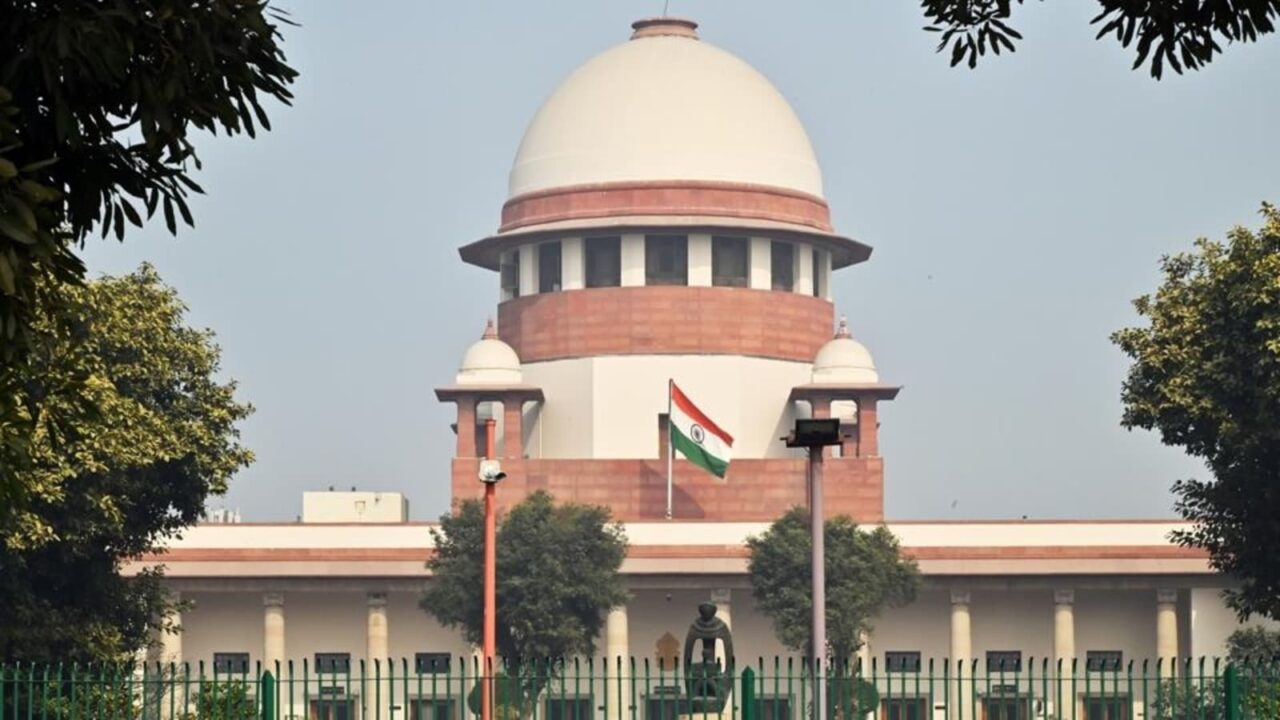
The Supreme Court on Friday agreed to examine a plea filed by a woman staff member of West Bengal Raj Bhawan. She alleged sexual harassment by Governor CV Ananda Bose and challenged the immunity granted to the Governor under Article 361 of the Constitution. A bench comprising Chief Justice of India DY Chandrachud and Justices JB Pardiwala and Manoj Misra sought the Attorney General for India R Venkataramani’s assistance in the matter and issued a notice in the plea filed by the woman staffer.
The bench granted the petitioner liberty to implead the Union of India in the petition. The West Bengal government also accepted the notice. The bench sought their response within three weeks. Senior advocate Shyam Divan, representing the petitioner, argued that Article 361 of the Constitution cannot serve as a barrier to the investigation.
Divan stated, ‘It cannot be that there is no investigation. Evidence has to be gathered right now. It cannot be deferred indefinitely.’ The petition asks the apex court to decide whether acts of sexual harassment and molestation fall under the Governor’s official duties, warranting blanket immunity under Article 361 of the Constitution.
According to Article 361(2) of the Constitution, no criminal proceedings can be instituted or continued against the President or a Governor in any court during their term. The plea emphasized that the court must decide whether the petitioner can be left without remedy, with the only option being to wait for the accused to leave office. Such delays would affect the trial’s credibility and render the judicial process ineffective and unfair to the victim.
The petitioner claimed that such immunity should not be absolute and requested the Supreme Court to frame guidelines for the extent of immunity enjoyed by governors. ‘The petitioner is aggrieved by the sexual advances/harassment made by the constitutional authority – the Governor, State of West Bengal in the premises of Raj Bhavan itself. However, due to the blanket immunity bestowed under Article 361, the petitioner is left without recourse despite the offence against her person, compelling her to approach this apex court directly,’ the petition stated.
The plea argued that immunity provided by Article 361 should not be absolute, especially in cases involving illegal acts or violations of fundamental rights. It stated that such immunity should not hinder law enforcement’s ability to investigate the offence or name the perpetrator in the complaint or FIR.
‘Such powers cannot be understood to be absolute, enabling the Governor to perform illegal acts or violating Part III of the Constitution. Further, such immunity should not impede investigative powers or naming the alleged perpetrator in the complaint or FIR despite specific allegations,’ it added. The petitioner has also called for a comprehensive investigation by the West Bengal police and sought protection and security for herself and her family.
According to her complaint, the Governor had called her on April 24 and May 2 under the false pretext of offering a better job, only to sexually harass her within the Raj Bhavan premises during working hours. While an FIR was lodged against the Governor’s officer on special duty (OSD) and other Raj Bhavan staff, the Calcutta High Court in May had stayed the proceedings.
The FIR alleged that the OSD and other staff restrained and pressured the woman from lodging the sexual harassment complaint against the Governor.