
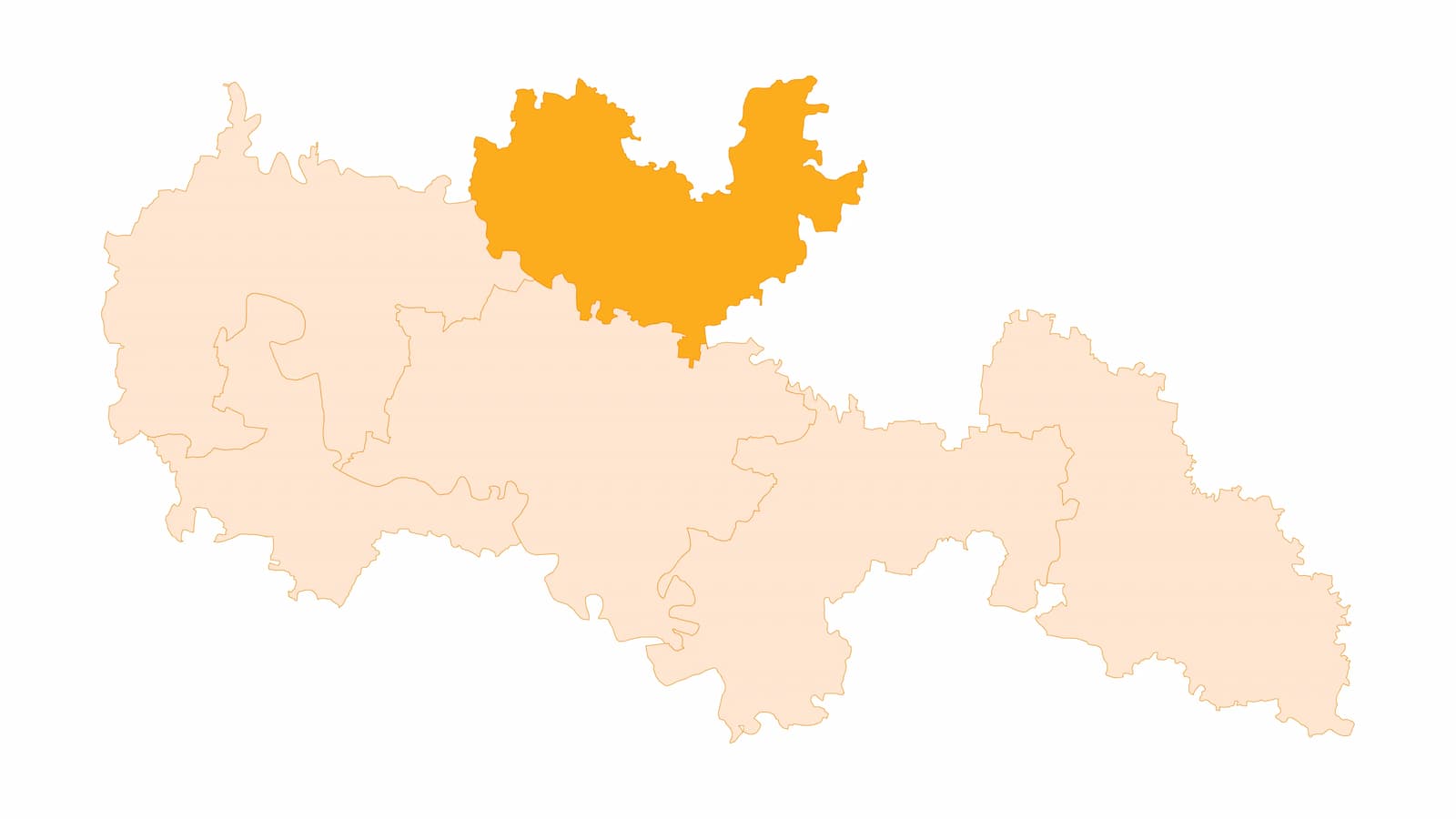
Hayaghat Assembly Constituency 2025: Hayaghat is a general category (i.e. non-reserved) Assembly constituency in Darbhanga district in Bihar. It was established in 1967. As per the delimitation carried out in 2008, Hayaghat consists of the full block of Hayaghat, and 18 Gram Panchayats of Baheri CD Block (these include Athar North & South, Baligaon, Bhachhi, Bithauli, Chakwa Bharwari, Dhanauli, etc.). The constituency is rural with no registered urban voters. It falls under the Samastipur (SC) Lok Sabha parliamentary constituency.
Voters and Local Issues
Voters: In 2020, Hayaghat had about 242,053 electors. Also in that election, valid votes polled were around 143,051, showing a turnout of about 59.1%.
Local issues in Hayaghat tend to revolve around infrastructure (roads, connectivity to district centres), basic services such as electricity, water supply, health facilities, flood control (as with many rural parts of Bihar), agricultural support, irrigation, etc. Caste dynamics also matter significantly, as is common in rural Bihar.
Hayaghat Assembly Constituency 2025: Recent Political History
Hayaghat has seen fluctuating political allegiances. Early decades were dominated by the Congress party, which won many of the first elections. Over time, regional parties became more important. For example, Hari Nandan Yadav from RJD won multiple times.
In 2010, the seat was won by Amarnath Gami representing BJP, and in 2015 he won again but under Janata Dal (United) (JD(U)). In 2020, Ram Chandra Prasad of BJP won, defeating Bhola Yadav of the RJD by a margin of about 10,252 votes.
Election Numbers (2010–2020)
In 2010, Amar Nath Gami (BJP) won with 32,023 votes, against Dr Shahnawaz Ahmad Kaifee (LJP) who got 25,998. Total valid votes ~ 90,930 and turnout around 49.4%.
In 2015, Amar Nath Gami (this time JD(U)) won with ~65,677 votes. His margin over next candidate (Ramesh Choudhary of LJP) was large (≈ 33,231 votes). Total valid votes ~123,180 with turnout around 56.04%.
In 2020, Ram Chandra Prasad (BJP) won with ~67,030 votes, vs Bhola Yadav (RJD) ~56,778. Margin was ~10,252 votes. Vote share for winner ~46.86%, runner up ~39.69%. Valid votes ~143,051, turnout ~59.1%.
Hayaghat Assembly Constituency 2025: Past Complete Winners List
1967: Baleshwar Ram (Congress)
1972: Congress (name: again Baleshwar Ram or other, but broadly Congress)
1977: Anirudh Prasad (Janata Party)
1980: Madan Mohan Choudhary (Congress-I)
1985: Umadhar Prasad Singh (Independent)
1990: Kafil Ahmad (Janata Dal)
1995: Hari Nandan Yadav (Janata Dal)
2000: Umadhar Prasad Singh (Independent)
Feb 2005: Harinandan (RJD)
Oct 2005: Harinandan (RJD)
2010: Amarnath Gami (BJP)
2015: Amar Nath Gami (JD(U))
2020: Ram Chandra Prasad (BJP)
Known Candidates in Assembly Election 2025
As of now, full verified list of candidates for Hayaghat in 2025 is not fully public in the sources. However, some points:
The incumbent MLA is Ram Chandra Prasad (BJP), who won in 2020.
The major likely challengers include Bhola Yadav of RJD, who was runner-up in 2020.
Barh Assembly Constituency 2025: Full Candidate List, Poll Date, Past Results and Winning Margins
Hayaghat Assembly Elections 2025 Voting Date
Hayaghat is voting today (06.11.2025) as part of Bihar’s first phase of polling
Hayaghat Assembly Elections 2025 Result Date
The Election Commission of India (ECI) has set 14.11.2025 as the date of results for the Hayaghat constituency, along with the polling result of all Bihar Assembly seats.
What to Watch During the 2025 Contest?
1. Margin Trends: In 2020, the margin of victory was ≈ 10,252 votes. In earlier elections (e.g. 2015), the winner had a larger margin.
2. Vote Share Shifts Among Parties: Whether BJP holds up its vote share or loses ground; how RJD or Congress perform; whether any new or third party candidate cuts into the base of established parties.
3. The local issues have a significant influence on the voter perceptions besides the state and national narratives, which mainly revolve around development, infrastructure, and services.
4. Caste and Community Dynamics: The importance of caste in rural Bihar is such that the preferred social group will be a major influencer in the elections there.
5. Voter Turnout and First-Time Voters: The turnout numbers have been on the rise from 2010 to 2020. Moreover, the youngest voters (first time) might bring new expectations.