

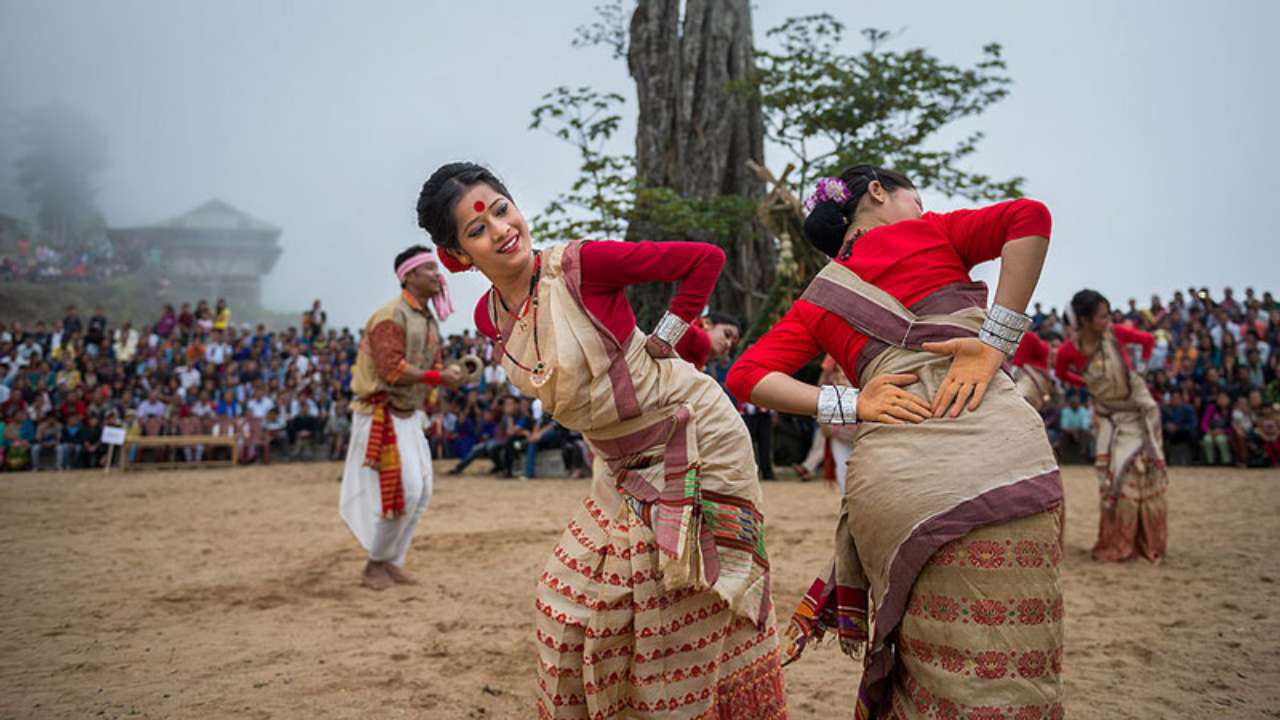
Magh Bihu 2026: Magh Bihu 2026 or Bhogali Bihu as it is called locally will be a grand celebration filled with the community spirit taking place on Thursday, January 15, 2026. This yearly harvest festival, closely tied to the agrarian culture of Assam and nearby regions, indicates the happy end of the laborious months in the fields and also the start of a period full of goods, love, and culture pride.
What is Magh Bihu?

Magh Bihu or Bhogali Bihu is one of the three main Bihu festivals celebrated by the people of Assam and Assamese communities across the globe. The name of the festival is derived from the Assamese word “Bhog” which means feast or enjoyment and thus the festival is a celebration of food, wealth and the shared thankfulness of the people after the harvest season.
Though the festival is celebrated around the same time as Makar Sankranti which is celebrated all over India, Magh Bihu has its own specific Assamese customs that emphasize community togetherness, ritual fire worship and vast culinary heritage.
Happy Bohag Bihu 2025: Wishes, Images, Quotes, Messages to share on Rongali Bihu
Magh Bihu 2026: Date and Key Timings
In the year 2026, the day of celebrations of Magh Bihu will be January 15, which is a Thursday, and the festivities will start revolving around the night of the previous day, Uruka, that is, the eve which has been bringing families together traditionally through a grand feast.

Though the 15th day is marking the main event, the festival actually goes on through the two days of January 14 and 15, starting with Uruka on the 14th and climaxing in the main day of Magh Bihu.
Magh Bihu 2026: Rituals
At the center of Magh Bihu is the Uruka night, the festival eve, where the families, friends and neighbors gather for the great time to come. Temporary huts called bhelaghars are made from bamboo, leaves and hay in the fields or on the banks of rivers. These huts are not only places for cooking and enjoying the feast that shares the harvest but also for bhelaghars.

The morning of Magh Bihu sees the most iconic tradition of the day, the burning of the Meji after a ritual bath to purify the body of the day. These pyres comprising bamboo, dry leaves, and straw are made at the dawn and set ablaze ceremonially.

The flame is both a symbol and a sacred thing: it makes the land holy, removes the last signs of the cold winter, pays tribute to Agni Dev and asks for the same blessings as protection and fertile fields for the next year. Along with this, offerings such as rice cakes and betel nuts are very often put into the fire as part of the prayer and thanksgiving ritual.
Communities also indulge in time-honored games and celebrations like tekeli bhonga (pot-breaking) and, in some remote areas, buffalo fights and other sports events that are linked with local practices. These activities add to the festival’s lively social vibe and help in bringing people together for a common celebration.
Cultural Significance
The nature of Magh Bihu has a very strong bond with Assamese daily life. Thanksgiving to nature is the basic, and farmers and families together show their thankfulness for the harvest, the soil fertility, and the food that supports their communities.
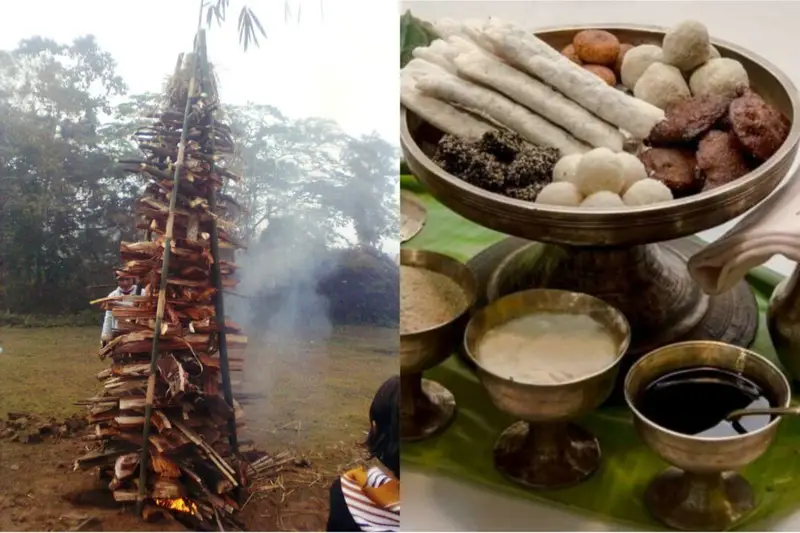
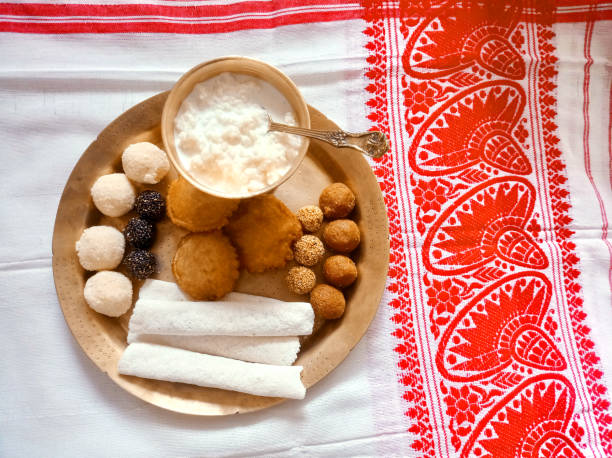
Along with the traditional foods, natural dishes are also the center part of the festival. Pithas (rice cakes), larus (sweet balls), chira (rice flakes), akhai (puffed rice), and fish or meat dishes are the main foods of the festive feast that are shared among the relatives.
During this time, the local specialties such as chunga pitha, which is made with rice cooked in bamboo tubes, are coming back to the markets and even to the homes. These dishes represent the rich flavours of the Assamese tradition.