
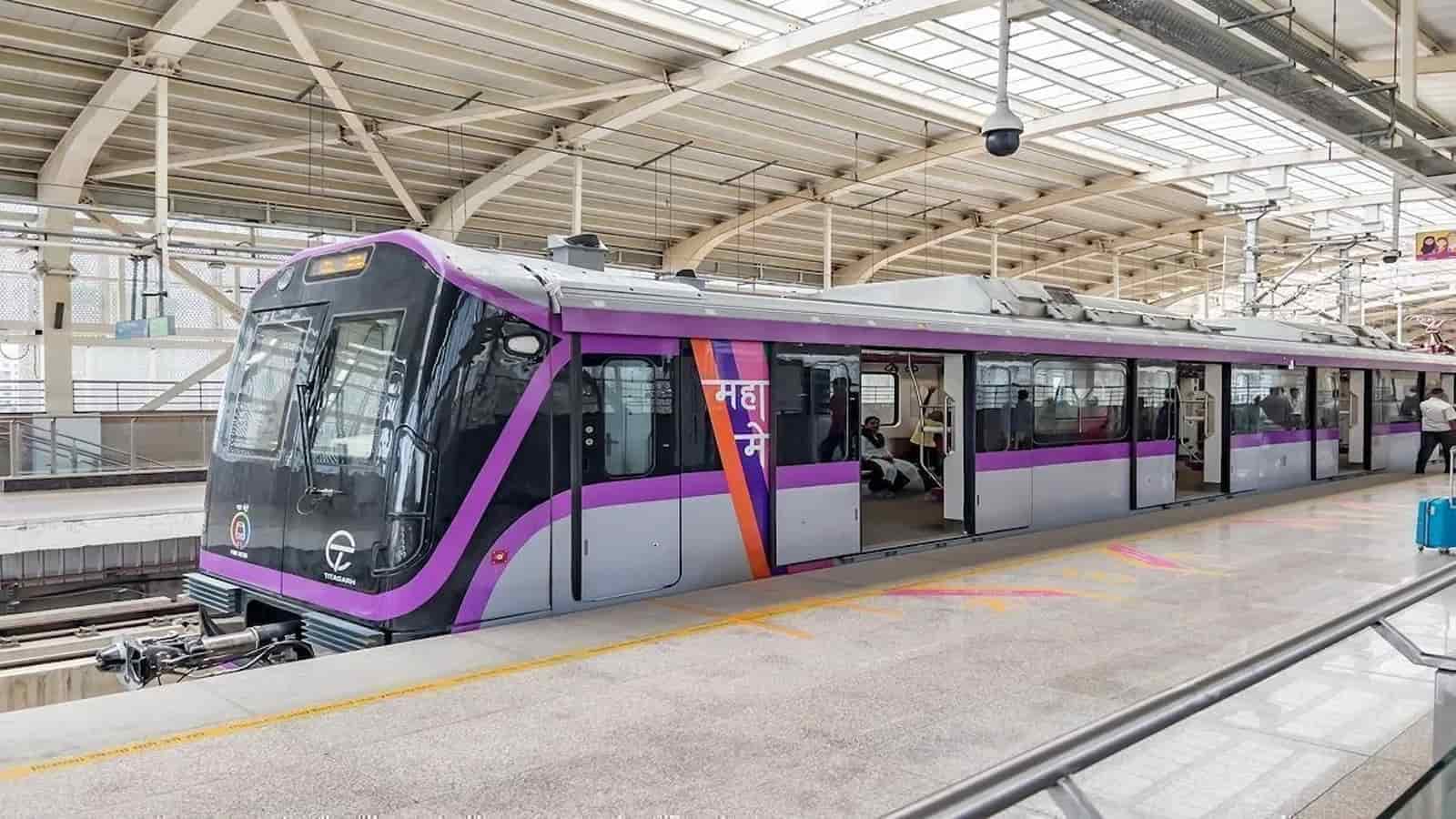
Mumbai Metro Line 1: Mumbai’s arterial east-west corridor especially the Andheri East to Saki Naka stretch has long been a pain point for commuters. With the Metro Line 1 (also called the Versova–Andheri–Ghatkopar corridor) running heavily crowded during peak hours, transport experts say that adding more trains isn’t the only solution. Instead, they propose a simpler, low-cost alternative: a dedicated bus lane along the 4.8 km Andheri East–Saki Naka road.
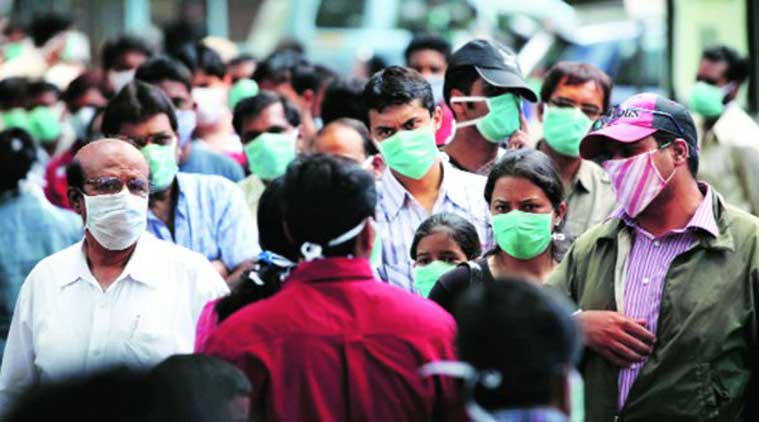
The idea comes in response to repeated crowding on Metro trains especially since Metro-1 uses four-coach trains which struggle to handle the rush of morning and evening commuters.
In a proposal submitted by researcher Shubham Padave to transport economist Ashok Datar, the plan calls for carving out a red-painted, CCTV-monitored bus-only lane on this corridor that already hosts frequent buses from the city’s bus services.
Features of the Mumbai Metro Line 1
Under the planned changes:
In each direction, the left-most lane of the current three-lane road would be reserved solely for buses and emergency vehicles. This would make it feasible geometrically without the need for widening the road.
The bus lane would be kept continuously red and would be CCTV-monitored, a step that would facilitate the enforcement of the bus-only rule and also serve as a deterrent to those who might violate it.
During Stage 1, the bus lane will be implemented between Andheri East and Saki Naka. After gauging the success of Phase 1, the second stage could potentially extend the line to such areas as Chakala and SEEPZ Village.
Transport specialists are confident that this is a very cheap solution that would take less time than road widening or adding more metro coaches and may alleviate the Metro Line 1 load to a great extent.
Green Signal for Pune Metro Line 4 & 4A: 31.6 km Expansion Approved
Potential Benefits for Commuter, and the City
By avoiding getting trapped in the mixed traffic, buses will definitely run on time and commuters travelling between Andheri East, Saki Naka, as well as the nearby commercial hubs, will benefit from these predictable travel times.
Some people may switch from the Metro to the use of dedicated buses thus the number of passengers on Metro coaches during peak hours may decrease accordingly, leading to increased comfort and shorter waiting periods.
Compared to expanding the train to increase its capacity or widening the roads turning an existing lane into a bus-only corridor would involve less money and could be implemented faster.
At the same time, buses could provide better last-mile connectivity, especially for offices, business districts and residential areas along the corridor, where they can offer access that the Metro may not be able to provide directly.
What Happens Next?
Currently, the proposal is at the recommendation stage. The detailed plan presented to Ashok Datar still needs to be given the green light by the BMC, the traffic police, and the BEST before it can be put into action.
If everything were to go smoothly, we would soon see the implementation of Phase 1 (Andheri East ↔ Saki Naka), which not only would provide commuters with a practical MO to the overcrowded Metro but would also be a good start. Local authorities maybe take it further by extending the second stage along with the industrial and commercial hubs of SEEPZ, Chakala, and the other nearby localities.
Meanwhile, passengers are able to reap the benefits of current work: BEST has recently launched a new AC bus route A-329, which serves the areas of Andheri East, Saki Naka, Marol, Chakala, and the like, with the objective of enhancing comfort and connectivity.