
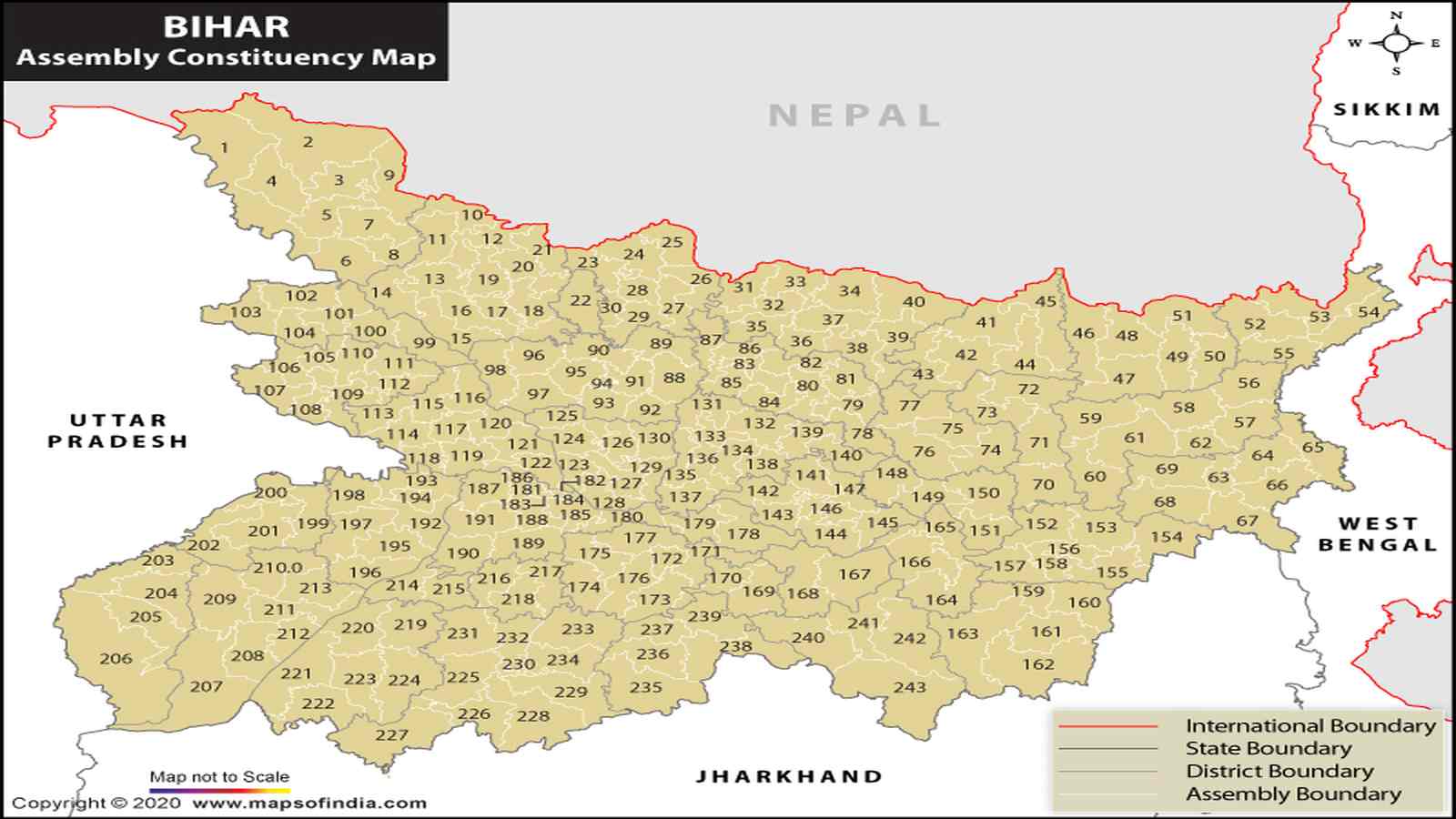
Begusarai Assembly Constituency 2025: Begusarai sits on the northern bank of the Ganges in the Mithila region and is the administrative and industrial hub of Begusarai district. The assembly seat includes Begusarai municipality plus a mix of surrounding rural panchayats (as defined by the 2008 delimitation), giving the constituency a hybrid urban–rural electorate. The district is known for industry (Barauni-area units and allied trade activities), agriculture (lychee, oilseeds, vegetables) and ecological assets such as Kanwar Lake (a Ramsar site).
Geography, Voters and Local Issues
Voter concerns typically split between urban civic issues (water, sanitation, jobs, industrial development) and rural worries (rural jobs, irrigation, flood management, farmer incomes). Caste and community arithmetic (presence of Brahmins, Yadavs, Muslims, OBC groups) also shapes campaign strategies.
Begusarai Assembly Constituency 2025: Recent Political History
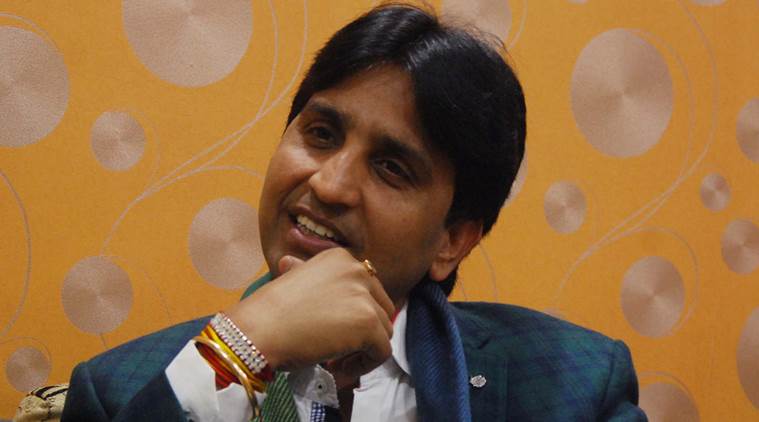
Begusarai has been a competitive seat that has swung between Congress and BJP/Rival candidates in recent cycles. The constituency attracted national attention in the 2010s and 2020s because of tight margins and high-profile candidates. In 2015 the Indian National Congress won here (Amita Bhushan), while in 2020 the BJP captured the seat (Kundan Kumar) in a closely fought race; that pattern alternating winners and close vote-shares makes Begusarai a hotspot to watch in 2025. Campaigns in recent elections have focused on employment, local infrastructure, law-and-order and the performance of state-level alliances.
Election Numbers (2010–2020)
Between 2010 and 2020 Begusarai saw strong turnout but narrow margins in the top two. In 2010 BJP’s Surendra Mehata won with roughly 50,602 votes (about 39% of polled votes). In 2015 Amita Bhushan (INC) overturned the seat official forms show she polled over 83,500 votes with turnout close to mid-50% in the constituency.
In 2020 Kundan Kumar (BJP) won by a thin margin he polled around 74,200 votes (~39.6%) against Amita Bhushan’s ~69,600 (~37.3%), with total electors reported in the 2020 roll at ~3.20–3.36 lakh depending on the official document cited. The pattern is: contest decided by a few thousand votes, with the two leading parties splitting close to 75–80% of the vote between them.
Barari Assembly Constituency 2025: Full Candidate List, Poll Date, Past Results and Winning Margins
Begusarai Assembly Constituency 2025: Past Winners
2020: Kundan Kumar — Bharatiya Janata Party (BJP)
2015: Amita Bhushan — Indian National Congress (INC)
2010: Surendra Mehta — Bharatiya Janata Party (BJP)
October 2005: Bhola ― Bharatiya Janata Party (BJP)
February 2005: Bhola ― Bharatiya Janata Party (BJP)
2000: Bhola Pd Singh ― Bharatiya Janata Party (BJP)
1995: Rajendra Pd Singh ― Communist Party of India (Marxist) (CPI(M))
1990: Basudev Singh ― Communist Party of India (Marxist) (CPI(M))
1985: Bhola Singh ― Indian National Congress (INC)
1980: Bhola Singh ― Indian National Congress (I) [INC-(I)]
1977: Bhola Singh ― Indian National Congress (INC)
1972: Bhola Singh ― Communist Party of India (CPI)
Begusarai Assembly Elections 2025 Voting Date
The Begusarai seat in the Bihar Assembly Election was voted on November 6, 2025.
Begusarai Assembly Elections 2025 Result Date
The Election Commission of India (ECI) has set 14.11.2025 as the date of results for the Begusarai constituency, along with the polling result of all Bihar Assembly seats.
Begusarai Assembly Elections 2025 Candidates List
| Party | Candidate Name |
|---|---|
| AAP | Mira Singh |
| BJP | Kundan Kumar |
| BSP | Mohammad Abdul Haque |
| INC | Amita Bhushan |
| Jan Suraaj Party | Surendra Kumar Sahani |
| Janshakti Janta Dal | Ram Krishna Mahto |
| SUCI(C) | Gautam Kumar |
| Samata Party | Sushil Kumar |
| INDEPENDENT | Arun Kumar, Manoj Kumar, Md Gaffar Khan, Md Saddam Husain, Pinki Sinha, Vijay Kumar |
What to Watch During the 2025 Contest?
1. Incumbent vs comeback dynamic: Whether Kundan Kumar (BJP) can hold against a potentially reenergised Amita Bhushan/Congress challenge Begusarai has delivered close finishes recently, so small swings matter.
2. Urban–rural turnout split: Begusarai’s mix of municipal voters and surrounding rural panchayats means which side gets better turnout will likely decide the result. Expect heavy micro-targeting on local civic issues vs agrarian ones.
3. Local issues vs state/national narrative jobs, industrial revival (Barauni-adjacent industries), flood/river management and civic services will be weighed against larger state-level narratives (anti-incumbency, alliance messaging). The seat is receptive to both local governance arguments and wider coalition narratives.
4. Candidate selection & alliances: Pre-poll alliances or a surprise independent can split or consolidate the anti-incumbent vote; keep an eye on final nominations and whether smaller players (local independents or smaller parties) eat into either lead candidate’s base.
5. Voter roll revision & ECI exercise effects: Administrative moves (electoral roll revisions, special verification drives) and how well parties mobilise their voters after those exercises can alter the effective electorate especially important in closely matched seats like Begusarai.