
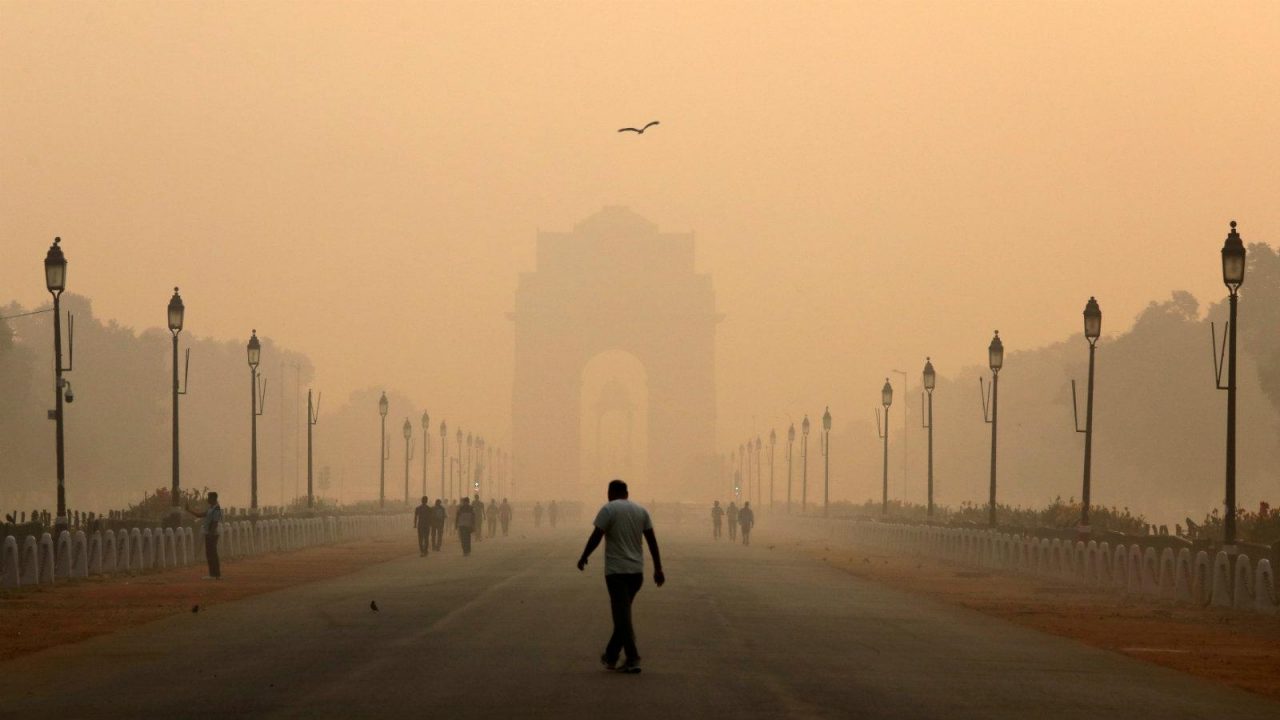
Cloud Seeding for Air Pollution: Delhi’s plan to bring artificial rain on October 29 was paused after scientists failed to produce rainfall through cloud seeding the previous day. The project aimed to clean the city’s air and lower pollution levels, but the weather did not support rain formation. Although cloud seeding is a technique used in many parts of the world, Delhi’s latest trial could not achieve the results officials were hoping for.
The Daily Jagran spoke with several experts to understand this complex process better, including Dr Kumar Sarang, Senior Associate in the Air Quality Observations group at the Center for Study of Science, Technology and Policy (CSTEP), Polash Mukerjee, Air Quality, Climate and Health Researcher, and Dr Thara Prabhakaran from the Indian Institute of Tropical Meteorology (IITM), Pune.
Delhi Zoo May Reopen in November: Bird Flu Test Report Still Pending
What is Cloud Seeding?
Cloud seeding is a method used to make clouds produce more rain than they naturally would. Scientists release special particles into the sky that help water droplets form inside the clouds.
Dr Kumar Sarang explained, “Cloud seeding is a weather modification technique that involves injecting artificial water-loving salt particles into clouds. These particles act as seeds (condensation nuclei) on which the water droplets or ice can stick and grow. When they become heavy enough, they fall to the ground as rain or snow.”
The IITM says these “seed” particles can be of two main types
- Cloud Condensation Nuclei (CCN), which attract water vapour and form droplets.
- Ice Nuclei, which help water freeze. The chemicals often used include silver iodide, potassium iodide, sodium chloride, and aluminium oxide.
These substances act as the base for raindrop formation when they are released into clouds.
According to Dr Sarang, scientists can send these particles into clouds using aircraft, ground-based machines, or rockets. He added that the success of this process depends on several factors like the type of clouds, the seeding materials, and the timing of the operation.
From the US to India
Cloud seeding is not a new idea. It was first tested in the United States almost 75 years ago. In 1946, scientist Vincent Schaefer successfully tried it in a lab. The following year, in 1947, researchers began “Project CIRRUS,” which studied how cloud seeding could create rain. More than 100 flights were carried out to test the method on different types of clouds. The goal was to increase rainfall in dry areas and support agriculture. It was also found useful in reducing hailstorm damage by shrinking hailstones.
India’s first attempt came during the 1970s when the Indian Institute of Tropical Meteorology tried cloud seeding experiments. However, the results were uncertain, and scientists could not draw a clear conclusion. Some experiments suggested rainfall increases by around 17%, while others showed no significant effect, leaving the process under debate.
Other countries have also tried this method. Australia and the Middle East used it in dry regions to improve rainfall. Studies have also reported success in parts of India. A project in South Korea even showed a decrease in PM10 pollution levels after cloud seeding.
Researcher Polash Mukerjee mentioned that China used the method before the Beijing Olympics to improve air quality, while Dubai has used it multiple times to reduce pollution levels.
Uncertain Results
Experts say many conditions need to align for cloud seeding to work effectively. “Cloud type, prevailing meteorological conditions, type of seeding agent used, and the timing of seeding operations, play a critical role,” said Dr Sarang. He added that there is still not enough long-term evidence to prove how effective the technique really is, though ongoing studies are trying to understand it better.
Dr Sarang also referred to earlier research, saying some studies like Bruintjes (1999) raised doubts about the scientific methods used.
He said there is a need to understand cloud behaviour more deeply before claiming full success of seeding. Polash Mukerjee pointed out that environmental safety is another issue, saying, “There are several environmental concerns. Soil and water can be impacted as a result. Silver iodide is commonly used in the process and it is toxic to aquatic life.”