

A variety of caste groups such as Yadavs, Kurmis, and Kushwahas are part of them, which have a pivotal role in voting results.
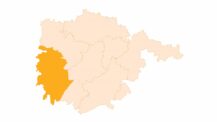
Expect date to be part of a phased October/November polling schedule.

Imamganj has experienced the changing political stances several times throughout the years. The 2015 Bihar Assembly elections witnessed a powerful triumph by Jitan Ram Manjhi of the Hindustani Awam Morcha (HAM).

The voter base here is varied, young voters constitute the largest group, and there are more than 10.7 lakh new voters across Bihar for the 2025 elections.

For the 2020 assembly elections, 302,211 was the total number of voters in Hilsa, while 165,580 were the total valid votes. In the last few elections, the constituency has had very close contests.

The constituency is rural with no registered urban voters. It falls under the Samastipur (SC) Lok Sabha parliamentary constituency.

The incumbent Rajesh Kumar Singh (RJD) is expected to contest, seeking re-election.
In the 2020 assembly elections, the Rashtriya Janata Dal (RJD) candidate Tej Pratap Yadav won the Hasanpur seat. He defeated Raj Kumar Ray of Janata Dal (United) [JD(U)] by a margin of 21,139 votes. Tej Pratap Yadav got roughly 47.27% of the votes.
In 2015, total electors in Harsidhi (SC) were ~ 234,302. The constituency has a high Dalit (SC) population, given its reserved status.
Voter profile: In 2020, Harnaut had roughly 308,138 registered voters. Of these, Scheduled Castes are significant about 24.15% of the electorate. Muslims are a very small percentage (~0.5%). The constituency is entirely rural, with no urban voters.
That is a flat, agrarian border area in north-eastern Bihar with rivers like the Kamala shaping seasonal flooding and crops.
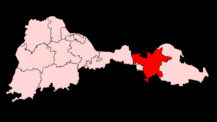
Over recent elections Barh has transitioned from being more of a Congress stronghold to being dominated by BJP and JD(U) with the incumbent Gyanendra Kumar Singh (also known as Gyanu) having won multiple times.

Gurua is a predominantly rural village area with a diverse demographic. The voters are mostly Koeris, Yadavs, and Muslims, three groups that are the social base of the assembly area together.
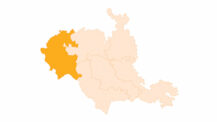
Govindganj’s electorate is a mixed bag, consisting mainly of the upper-caste and Other Backward Class (OBC) communities.
The voters of Goriakothi are drawn from a wide variety of social groups and the Yadav, Rajput, and Brahmin communities are numerically the most dominant.
It still has a partly agrarian economy that profits from the rich alluvial soil located close to the Ganga River.
Considering that in the past years, the BJP has had control over the constituency, it can be assumed that they will present a powerful leader to maintain the seat.
Historically, Goh has been influenced by various empires, including the Maurya and Gupta empires, and later by Sher Shah Suri.
The area is made of several villages, with a significant population of Dalit and Muslim communities.
Expect date to be part of a phased October/November polling schedule.
Situated approximately 116 kilometers south of Patna, Gaya is the third largest city in Bihar.
With the past trends of the constituency, the candidates of the RJD, BJP, and other regional parties may be the probable ones to run for the seat.
It covers the entire Gaighat and Bandra community development blocks and a few gram panchayats, including Katra, Sonpur, Berai South, Dhanaur, Madhepura, and Shivdaspur. The voters are a mix of Yadavs, Kurmis, Muslims, Scheduled Castes (SCs), and Other Backward Classes (OBCs).
It encompasses the entire Forbesganj Community Development Block, which includes the town of Forbesganj and surrounding rural areas.
The BJP is likely to have a candidate to run for the seat but no exact person has been revealed yet.










