
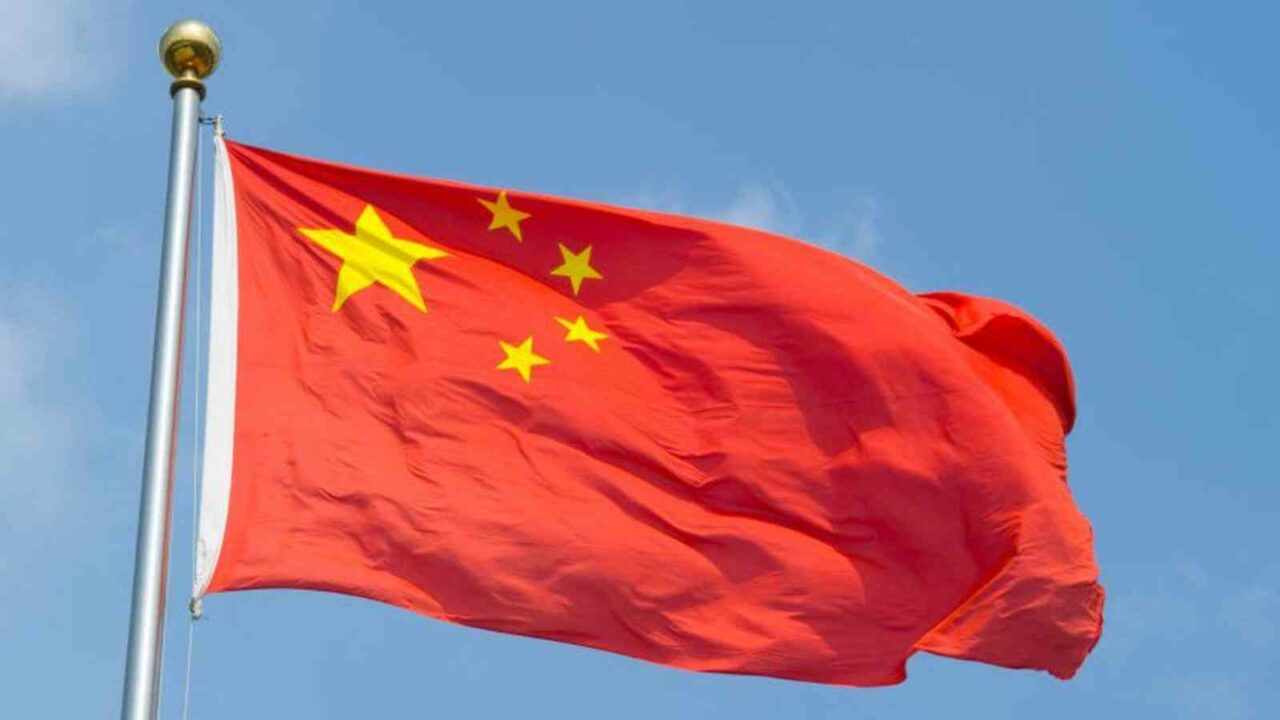
China Sanctions 20 U.S. Defense Firms: A major step up in the conflict between the two superpowers, the defense-related companies represented by the United States have been sanctioned by the People’s Republic of China along with ten senior executives as a reaction to the United States’ largest-ever arms sale to Taiwan. The action, which was made public on December 26, 2025, highlights the determination of China to strengthen its firm stand against the U.S. military aid to Taiwan and at the same time indicates the increasing pressure in the area of China and the United States relations.
China Sanctions 20 U.S. Defense Firms
The latest sanctions come after the U.S. State Department approved an $11.1 billion weapons package for Taiwan, which would be the largest single arms sale in history for the island.
From Washington’s perspective, such sales are aligned with the Taiwan Relations Act, a U.S. law that obliges the United States to help Taiwan maintain sufficient self-defense capabilities. Yet in Beijing’s view, the arms package represents a deliberate challenge to its core foreign policy doctrines.
Scope and Measures
As per the announcement of the Chinese Ministry of Foreign Affairs, the countermeasures refer to 20 U.S. defense companies that are directly or indirectly involved in the sale of arms to Taiwan. The sanctions are put in place according to China’s Anti, Foreign Sanctions Law, which grants Beijing wide, ranging powers to retaliate against what it considers unfriendly foreign actions.
The main features of the sanctions are:
Asset freezes: Any movable or immovable properties of the target companies and executives within China shall be frozen.
Business prohibitions: Chinese companies and individuals will not be allowed to deal or have commercial, financial, or collaborative relations with the entities under sanction.
Travel restrictions: The executives named in the list will not be allowed to enter mainland China, Hong Kong, or Macau.
Besides the major U.S. defense contractors such as Northrop Grumman, L3Harris Maritime Services, Boeings defense operations in St. Louis, and other companies that are associated with the supply of the Taiwans defense forces, there are also other notable companies on the list.
Beijing’s Rationale
China’s government made the sanctions sound like a necessary and legitimate reaction to what it perceives as the One-China Principle violations. This principle is the key in China’s foreign policy that states Taiwan is under China’s jurisdiction. Chinese diplomats stated that the Taiwanese problem was the “core of China’s core interests” and a line that could not be crossed in the relationship between the two countries.
The Chinese Foreign Ministry in an official statement expressed that any outside help that improves Taiwanese defense capabilities is regarded as meddling in China’s internal matters and a regional destabilizer. The sanctions are also interpreted within the country as a sign of a strong commitment to protect national sovereignty and territorial integrity.
PM Modi will travel to China for SCO Summit: NSA Doval during talks with Wang
China Sanctions 20 U.S. Defense Firms: Implications
Analysts, while mentioning the affected U.S. defense companies, suggest that these firms usually have quite limited direct commercial dealings in China so that the validity of the sanctions is mostly symbolic in terms of economic impact but the diplomatic communication is crystal clear: Beijing is ready to step up punitive actions where it deems them to be of utmost strategic interests.
The most recent action is a further addition to the already delicate relationship between the U.S. and China, which has been under constant tension due to several factors: trade, technology, human rights, and military maneuvers in the Indo-Pacific. Among these issues, the Taiwan Strait is considered one of the most critical areas of conflict, with the U.S. supporting Taiwan’s self-defense and the Chinese claiming that unification under their terms is inevitable.
Experts point out that even these symbolic sanctions have a large-scale geopolitical impact, as they strengthen China’s determination to protect its territorial claims and, at the same time, send a loud and clear message to other countries and corporations who might be thinking of getting involved in arms sales to Taiwan about the risks they are taking.