

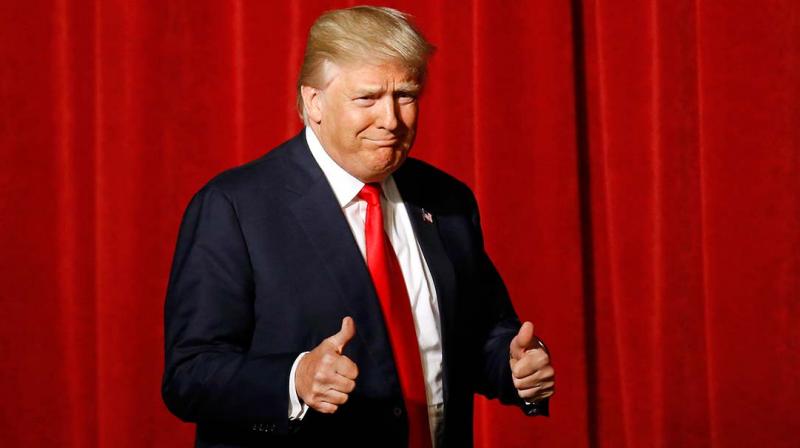
Trump’s “One Big Beautiful Bill”: Following months of negotiation and incendiary political debate, Donald Trump’s much talked “One Big Beautiful Bill” has at last overcome a substantial obstacle in Congress. This expansive bill is among the boldest bills proposed in recent memory, striving to prolong the 2017 tax cuts, increase military budgets, reduce clean energy subsidies and reform social security qualifications. Deemed “beautiful” by its proponents and “reckless” by its opponents, this legislation has the potential to redefine America’s economic destiny for years to come.
What’s Trump’s “One Big Beautiful Bill”?
The bill is basically a megabundle of tax, defense, energy and welfare reforms. It makes permanent the Trump-era corporate tax cuts, more than doubles the SALT deduction cap, and grows tax credits for families, tipped workers and small businesses.
On the outlay side, it offers more than $150 billion in military modernization, missile defense, and border wall expansion. In the meantime, it cuts green energy subsidies and tightens work requirements for Medicaid and SNAP beneficiaries. Crammed into the bill are measures limiting state AI regs and barring federal funding to nonprofits purportedly linked to terrorism.
What will this mean for the stock market?
In the near term, the bill should spark a rally in certain sectors. Corporate tax breaks and expanded deductions will help increase after-tax profit margins, particularly in sectors such as manufacturing, retail and services. As a result, the S&P 500 and Nasdaq may see an uptick driven by investor optimism and higher earnings potential.
Defense contractors like Lockheed Martin and Raytheon are already enjoying stock gains in anticipation of new military contracts. Fossil fuel and nuclear firms stand to gain from the clean energy incentive roll back, with coal and oil stocks predicted to increase.
Bond markets are warning. The additional government borrowing required to finance this bill has driven 10- and 30-year Treasury yields to multi-year highs. Higher yields may weigh on the housing market and interest-rate-sensitive tech stocks.
Trump’s “One Big Beautiful Bill” Economic Impact
From a macroeconomic viewpoint, the bill provides a big slug of fiscal stimulus into the economy. Others foresee a short-term injection for GDP growth perhaps as high as 5% per year over the next few years fueled by tax savings and government spending.
The flip side is worrisome. The CBO projects the bill could increase the national debt by more than $2.5 trillion over a decade. Credit agencies such as Moody’s have already cautioned about downgrades to the US credit rating, due to unsustainable debt levels.
Beyond that, slashing safety net programs while broadening tax breaks may increase income inequality. Low-income families that lose Medicaid or food assistance will cut back, damaging sectors such as retail and food services over the long run.
Sector Winners and Losers
Not all industries will profit equally. Here’s a brief overview:
Winners:
- Defense & Aerospace: Massive spending hikes for defense contractors.
- Old energy: Coal, oil and nuclear companies benefit as renewables subsidies wane
- Retail & Consumer Goods: Tax savings could increase disposable income for spending.
Losers:
- Green Power: Solar and wind companies may have a challenging journey.
- Physicians Medicaid cuts could reduce patient traffic and income.
- Increasing interest rates could cause losses in long-duration bond portfolios.
Dangers to Monitor
Even with all the bullishness, we can’t forget about the long-term risk. Increasing federal debt could result in increased taxes or reduced expenditures down the line. Spending-driven inflationary pressure could require the Fed to hold rates high longer. Geopolitical tensions along with a reprioritization at home could destabilize emerging markets connected to the U.S. economy.
Investors should likewise brace for volatility in the next presidential cycle. If there’s a political reversal in 2026 or 2028, some of the bill’s provisions will be rolled back, making this uncertain.
Hurdles remain, say mediators, as Trump claims Israel agreed to 60-day Gaza ceasefire
Trump’s “One Big Beautiful Bill”: Investors Insights
For investors, this could be a great time to shift and diversify portfolios toward defense, energy and financial stocks while avoiding long bonds and high-growth tech. Inflation-hedged assets such as commodities or TIPS could be stabilizing.
Consumers will get some short-term relief from tax cuts and deductions, but they need to be wary of the long-term impact on healthcare and cost of living. Anticipating higher interest rates and inflation will be key.
Trump’s ‘One Big Beautiful Bill’ is a high-stakes gamble that aims to supercharge growth through tax cuts and defense spending to the neglect of clean energy and social welfare. Though it may provide a short term lift to the markets and some slices of the economy, the long term impact of ballooning debt and income inequality and sectoral imbalance may be expensive.
This bill isn’t just about the numbers. It’s a message about where Trump wants to lead the country, both economically and ideologically. We’ll just have to wait and see if it ends up as “beautiful” as advertised.