
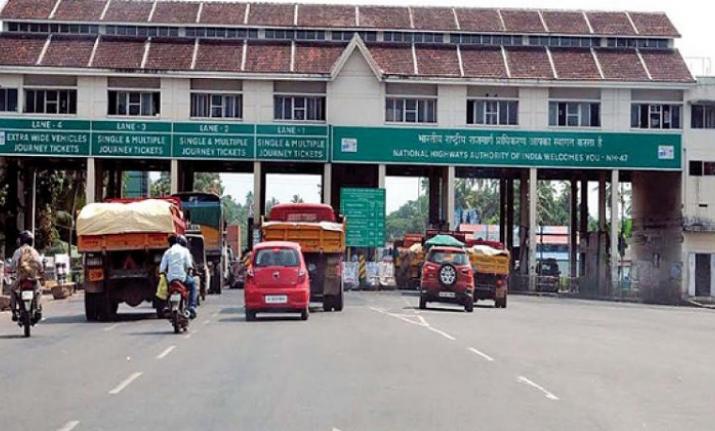
Toll Rates on Delhi-Meerut Expressway Revised: Commuters on the Delhi–Meerut Expressway (DME) will face higher tolls because the National Highways Authority of India (NHAI) approved a 5% toll increase. The new toll rates will begin at midnight on April 1 2026 because they follow the annual inflation and maintenance cost adjustment schedule.
Toll Hike Effective Date and Reason
The National Highways Authority of India (NHAI) will implement the toll revision for their annual financial year adjustment, which they conduct at the start of April according to multiple verified reports.
The toll increase will begin at midnight on April 1 2026. Average toll increase will reach approximately 5%. The National Highways Authority of India (NHAI) controls the toll rates. The toll rates change because of wholesale price index inflation and the need for infrastructure maintenance.
“As per the new rates, which vary based on the make of the vehicles, from Sarai Kale Khan to Meerut, which is about 82km, the new rates for one-way commuting for light vehicles — including cars, jeeps, vans or light motor vehicles — will be Rs 175, which was Rs 170. The rates for a return journey will be Rs 265 and increase by Rs 10,” said an NHAI official.
The yearly increase affects both the Delhi-Meerut Expressway and all national highways and expressways throughout India.
Toll Rates on Delhi-Meerut Expressway Revised
The official 2026 chart remains uncompleted, but current toll rates and historical changes provide exact estimates of the upcoming fee adjustments.
Cars / Jeeps / Vans (Light Vehicles)
- Current (approx.): ₹170 (Sarai Kale Khan to Meerut, one way)
- New Expected: ₹175–₹180
Light Commercial Vehicles
- Current: ₹275–₹280
- New Expected: ₹290–₹300
Buses and Trucks (2-axle)
- Current: ₹580–₹590
- New Expected: ₹610–₹620
Multi-axle / Heavy Vehicles
- Current: ₹630–₹905+
- New Expected: Increase proportionally by 5%
The new fare range for multi-axle and heavy vehicles will rise by 5 percent. The current cost structure shows that cars have increased their rate by ₹5 to ₹10 while heavy vehicles have increased their rate by ₹20 to ₹30.
IRB Infra starts toll collection on sections of NH-27, NH-731
Section-Wise Toll Impact
The Delhi-Meerut Expressway uses a distance-based toll system, which charges commuters based on their selected entry and exit points.
The following table shows the approximate post-hike fee increases for different routes:
- The route from Delhi at Sarai Kale Khan to Meerut requires payment between ₹175 and ₹180 for 82 kilometers of travel distance.
- The fare from Ghaziabad to Meerut will increase from ₹75 to ₹80.
- The short-distance stretches at Dasna and Bhojpur will have prices increase by ₹5 to ₹10.
- The current base toll for cars amounts to ₹2.34 per kilometer, but this rate will increase after the upcoming fare adjustment.
Why Toll Rates Increase Every Year?
The National Highways Authority of India uses a specific formula to calculate its toll revisions. The system determines costs based on use of roads which connects to the Wholesale Price Index (WPI) inflation. The system ensures funding for road maintenance activities, road improvement projects, and all expenses related to road operations. The system establishes toll rates for national highways which require annual implementation.
The standard procedure requires implementation of regular toll increases which has occurred throughout past years including the 2024 and 2025 adjustments that raised tolls by 4 to 5 percent. Distance-based tolling exists as the main system of charging on DME while highway annual pass programs which exist on other roads do not extend to this highway.